
Carbide conveyor belt scrapers, typically featuring tungsten carbide blades or tips, serve as heavy-duty cleaning solutions for industrial conveyor systems. These scrapers remove residual material (carryback) from the belt surface after discharge, particularly in demanding sectors like mining, aggregates, quarrying, and bulk material handling.
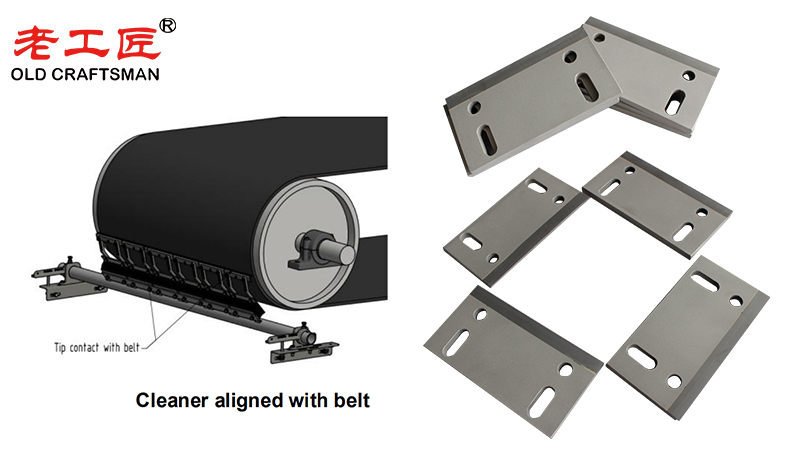
What Is a Carbide Conveyor Belt Scraper?
Conveyor belt scrapers (or cleaners) come in primary (at the head pulley for bulk removal) and secondary (further along for finer cleaning) types. Tungsten carbide versions use extremely hard carbide inserts or tips embedded in a blade holder, often combined with polyurethane or rubber for cushioning and flexibility.
Manufacturers like Flexco, ASGCO, MATO, Benetech, and others offer models such as:
- Y-Type Heavy-Duty or P-Type secondary cleaners with carbide blades.
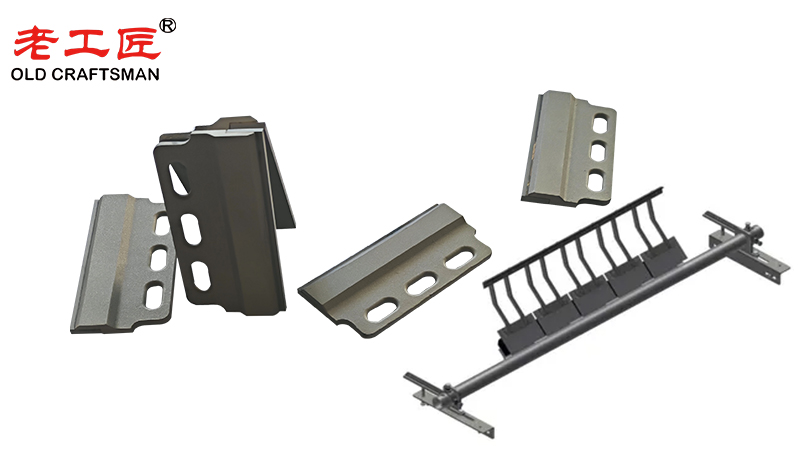
- Systems with overlapping segmented blades, self-tensioning arms, or independent cushion mounts that conform to belt irregularities.
Carbide blades suit both vulcanized belts and (with specific “C-Tip” or impact-grade designs) those with mechanical fasteners. They excel in abrasive, high-volume applications where standard polyurethane or rubber blades wear out quickly.
Key Advantages: Boosting Efficiency
Tungsten carbide stands out for its exceptional hardness (often 70-90 HRA or HV 1400-1800, roughly three times harder than high-speed steel and far superior to polyurethane in abrasion resistance). This delivers:
- Extended blade life — Carbide blades can last 10–20 times (or more) longer than polyurethane or steel alternatives in abrasive conditions, sometimes 2–3 years between replacements versus months for softer materials. This reduces downtime for changes and lowers total ownership costs, even if upfront prices run higher (e.g., ~30% more than polyurethane, offset by 58% or greater operating savings in some cases).
- Superior and consistent cleaning — The hard edge maintains sharpness and provides high-efficiency removal of stubborn, dry, caked, or highly abrasive carryback (often achieving 90–99.5% cleaning efficiency when paired with primary cleaners). Many designs offer a self-sharpening effect through segmented tips.
- Lower maintenance and operational costs — Fewer blade changes mean less labor, reduced inventory, and minimized production interruptions. Less carryback also cuts power consumption (less drag on pulleys/rollers) and extends the life of the belt, idlers, and other components by preventing buildup, mistracking, or jamming.
- Performance in harsh environments — Excellent resistance to abrasion, high temperatures (up to ~800°C in some formulations), corrosion, and chemicals, making them ideal for mining, wet/chemical exposure, or extreme conditions where softer blades fail rapidly.
Compared to polyurethane (more flexible, gentler on belts, better for lighter duties or worn belts), carbide prioritizes longevity and aggressive cleaning in tough applications—but it requires proper tensioning and is generally suited to undamaged or new belts to avoid excessive wear on the belt itself.
Enhancing Safety
Effective belt cleaning directly improves workplace safety:
- Reduced spillage and housekeeping — By minimizing carryback (material that sticks and falls off along the return path), carbide scrapers prevent accumulation on walkways, platforms, and under the conveyor, cutting slip/trip/fall risks.
- Lower dust levels — Cleaner belts mean less material is ground into fine, respirable dust (e.g., silica or coal dust), protecting respiratory health—especially when cleaning occurs while material is still damp.
- Fewer hazards from maintenance — Longer blade life translates to less frequent interventions in confined or elevated areas, reducing exposure to moving machinery.
- Overall site cleanliness — Less buildup lowers fire risks (in coal handling, for example) and improves visibility and access.
Many sources highlight how secondary tungsten carbide cleaners contribute to safer mining and bulk-handling operations by virtually eliminating carryback-related issues.
Considerations for Implementation
- Primary vs. secondary use — Carbide often shines in secondary positions for fine cleaning; combine with a primary scraper for optimal results.
- Tensioning and installation — Use self-adjusting or constant-tension systems (spring, pneumatic, or torsion) to maintain optimal blade pressure without over-tensioning, which could damage the belt.
- Belt compatibility — Choose impact-grade carbide for mechanical splices; avoid on heavily damaged belts where polyurethane may be safer.
- Customization — Options include segmented blades, different carbide grades (impact vs. long-life), and widths to match your belt.
In summary, carbide (tungsten carbide) conveyor belt scrapers deliver measurable gains in efficiency through dramatically longer service life, better cleaning performance, and reduced downtime/costs—while boosting safety by creating a cleaner, lower-hazard work environment. For heavy-duty, abrasive applications, they often represent a smart long-term investment over softer alternatives.
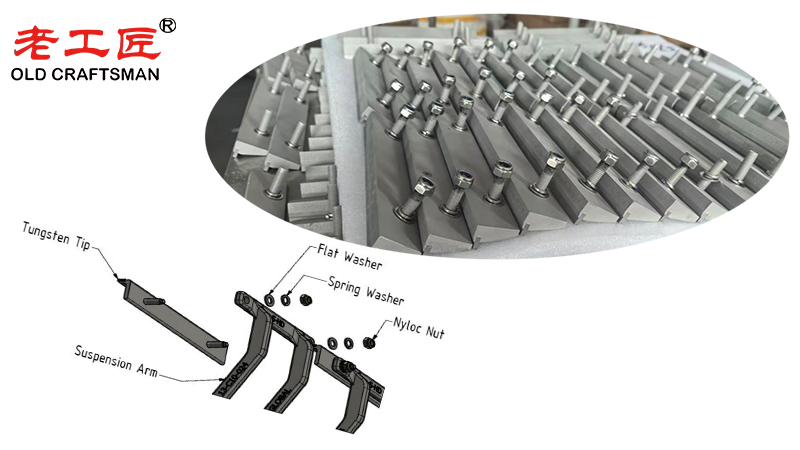
“Zhuzhou OC Precision Alloy Co., Ltd. could make tungsten carbide wear parts and make your equipment use life is tens of times longer than before! We specialize in providing customized carbide wear products solutions to meet the demanding requirements of industries such as aerospace, automotive, mining, and precision machining.”
Belt scraper Brazing brazingprocess carbide Carbide belt scraper carbidebrazing carbide hammer Crusher CRUSHER HAMMER HPGR HPGR feed chute liner Informational Internal stress metal mining Refractory Brick Mold Secondary belt cleaner scraper stresses VSI crusher wear plates welding