
The Core Problem: How Carryback Generates Dust
In any bulk material handling operation—whether mining, quarrying, or aggregate processing—one of the primary sources of fugitive dust is a phenomenon known as carryback. This refers to the fine particles, moisture, and residual material that cling to the conveyor belt after the main discharge at the head pulley.
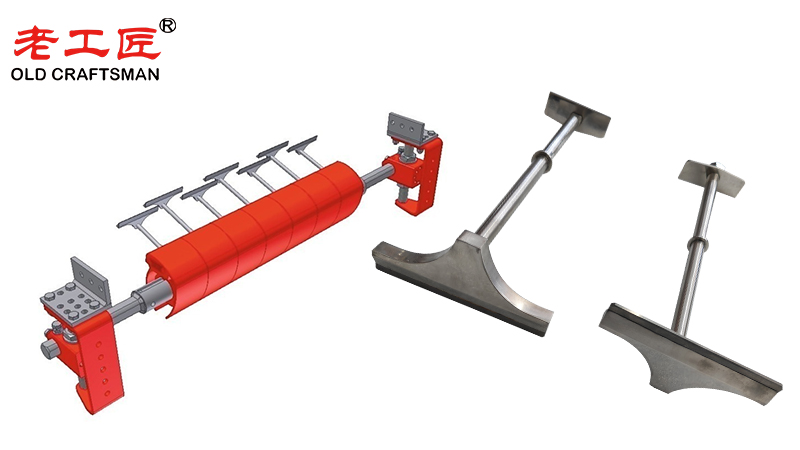
As this carryback travels along the return side of the belt, several dust-generating events occur:
- Airborne dust release as dried material falls off the belt
- Dust generation from material trapped between the belt and return idlers, grinding into fine particles
- Accumulated spillage that becomes a secondary dust source when disturbed or when dry
Beyond dust emissions, carryback creates a cascade of operational problems: belt mistracking, seized idlers, structural buildup, and significant labor costs for cleanup.
How Carbide Scraping Systems Work
Modern effective belt cleaning systems address carryback at its source by scraping the belt clean immediately after the discharge point. Tungsten carbide has emerged as the leading material for this application due to its exceptional properties.
Why Tungsten Carbide?
| Property | Advantage for Dust Control |
|---|---|
| Hardness (90-92 HRA) | Maintains sharp cleaning edge against highly abrasive materials |
| Wear Resistance | Lasts 5-10× longer than polyurethane or steel alternatives |
| Self-Sharpening Design | Consistent cleaning performance throughout service life |
| Temperature Tolerance | Operates from -40°C to 300°C in demanding environments |
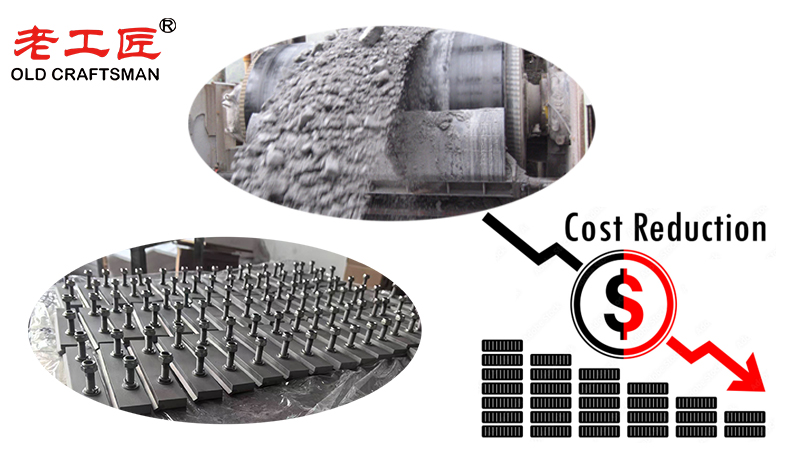
Tungsten carbide is one of the hardest materials available, second only to diamond on some scales-10. This hardness translates directly into sustained cleaning effectiveness: a carbide blade maintains its profile and contact pressure, while softer materials wear down rapidly and lose efficiency.
System Configuration: Primary and Secondary Scrapers
The most effective dust control strategy employs a two-stage cleaning system:
Primary Cleaner (Head Pulley)
- Mounted at the discharge pulley where the belt leaves the cargo
- Removes the bulk of material (typically 80-95% of carryback)
- Often constructed from engineered polyurethane or carbide matrix designs
- Some innovative designs mount diagonally across the pulley in a three-dimensional curve to maximize cleaning with minimal belt contact pressure
Secondary Cleaner (Return Side)
- Positioned immediately after the head pulley on the return run
- Targets the remaining fines, moisture, and sticky residues
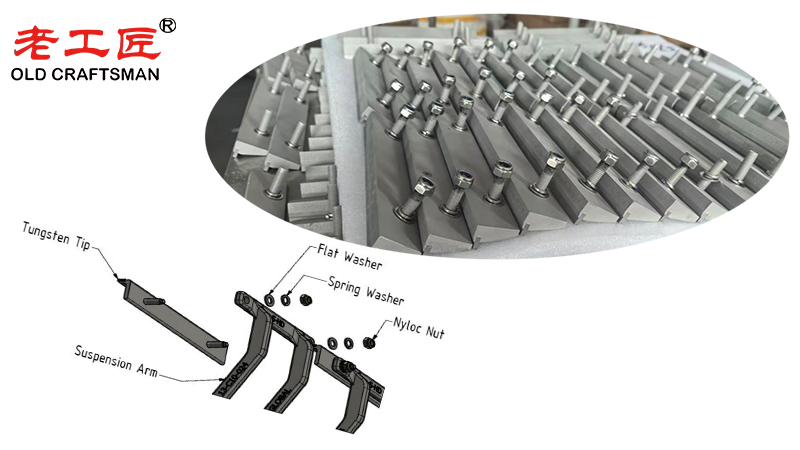
- Most effective designs feature independent spring-loaded carbide-tipped blades that conform to belt fluctuations
- Critical for dust-prone applications with wet, tacky, or fine materials
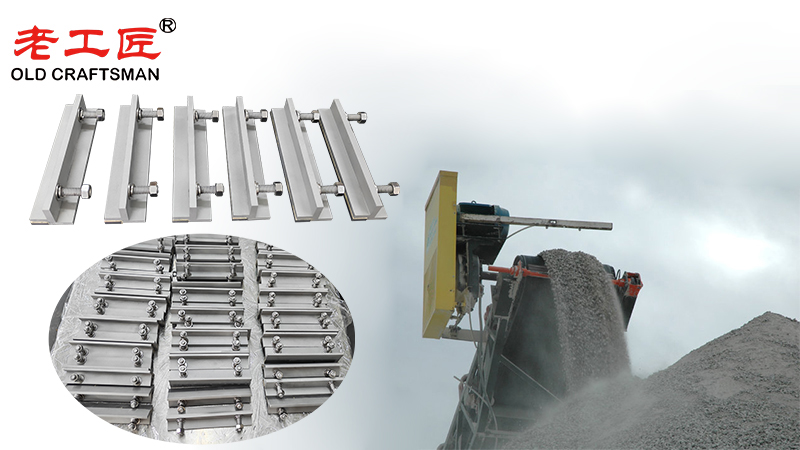
According to industry experts, secondary cleaners are “particularly efficient for applications that produce wet, tacky or dusty carryback”.
Documented Results: Dust Emission Reduction
Several case studies demonstrate the measurable impact of carbide scraping systems on dust control and operational efficiency.
Quarry Operation Case Study
A rock quarry processing crushed granite documented the following improvements after installing ZZ Craftsman carbide secondary cleaners:
| Metric | Before (Polyurethane) | After (Carbide) | Improvement |
|---|---|---|---|
| Carryback | 4.2% of throughput | 0.7% | 83% reduction |
| Cleaner replacement | Bi-weekly | Quarterly | 85% fewer changes |
| Belt life | ~9 months | 16+ months projected | ~78% increase |
| Annual maintenance savings | — | $48,000 | Significant |
The quarry reported that the carbide system removed “up to 99% of carryback material,” immediately stopping spillage problems and dramatically reducing dust generation.
Ready-Mix Plant Case Study
A concrete plant in the UK was struggling with excessive carryback on a sand and gravel conveyor. The tail drum was accumulating roughly 0.5 meters of material, requiring an hour of daily cleanup. After installing a tungsten carbide STARCLEAN® primary cleaner:
- Cleaning time reduced by 75% (from 1 hour/day to 1 hour/week)
- 96 hours of cleaning labor saved within the first 6 months
- 480 wheelbarrows of waste eliminated
- Staff welfare significantly improved—operators no longer needed to enter the pit for daily cleanup
The plant supervisor noted: “This was a task that nobody wanted to do. STARCLEAN® makes coming to work less stressful. Knowing I won’t have to get in a pit to shovel materials out each day means I can instead focus on value adding tasks.”
Secondary Benefits Beyond Dust Control
Implementing effective carbide belt scraping systems yields additional advantages that compound the return on investment:
Extended Equipment Life
Carryback acts as an abrasive agent between the belt and return idlers, “grinding away the belt’s top cover and weakening the carcass”. By removing this material at the source, carbide scrapers protect:
- Return idlers and rollers (prevent seizing)
- Pulleys and bearings (eliminate material buildup)
- The belt itself (reduce abrasive wear)
Reduced Maintenance Costs
The exceptional wear life of carbide translates directly into fewer blade changes, less tensioning adjustment, and dramatically reduced cleanup labor. Multiple sources report that carbide blades last “3-10× longer” than polyurethane or steel alternatives in abrasive environments.
Improved Safety and Compliance
Reduced dust emissions improve respiratory health conditions for workers and help operations maintain compliance with environmental regulations. Clean walkways eliminate slip and trip hazards associated with spillage cleanup.
Energy Savings
Effective cleaning reduces the weight and friction on the return belt, potentially yielding “10-15% potential energy savings on the drive motor”.
Considerations for Selection
When specifying a carbide belt scraping system for dust control, consider:
Belt speed and material abrasiveness determine the required carbide grade. For highly abrasive materials like sand, glass, or ore, specialized grades (such as TU03 or TU04 from Martin Engineering) are recommended and may not be compatible with mechanical belt splices.
Primary vs. secondary positioning affects performance. A secondary cleaner alone cannot compensate for an inadequate primary scraper. The two-stage approach is strongly recommended for optimal dust control.
Tensioning system quality matters. Effective cleaners feature mechanical, pneumatic, or spring-loaded tensioners that maintain consistent blade-to-belt contact without over-tensioning.
Conclusion
Lowering dust emissions through effective carbide belt scraping is not merely a matter of regulatory compliance—it is a direct contributor to operational efficiency, equipment longevity, and worker welfare. The documented evidence from quarry, mining, and concrete operations demonstrates that tungsten carbide-based cleaning systems can reduce carryback by 80% or more, extend belt life by months or years, and dramatically reduce the labor burden of cleanup.
As one industry expert concluded, along with lowering the cost of operation, “the most noticeable change is less dust along the belt path and in work areas. This improves employee morale and retention and results in better compliance.”
“Zhuzhou OC Precision Alloy Co., Ltd. could make tungsten carbide wear parts and make your equipment use life is tens of times longer than before! We specialize in providing customized carbide wear products solutions to meet the demanding requirements of industries such as aerospace, automotive, mining, and precision machining.”
Belt scraper Brazing brazingprocess CARBDIE HAMMER carbide Carbide belt scraper carbidebrazing carbide hammer Crusher CRUSHER HAMMER Informational Internal stress metal mining Refractory Brick Mold Secondary belt cleaner scraper stresses VSI crusher wear plates welding