
The hammerheads of an impact crusher come in various shapes, each designed to suit specific crushing needs and material properties. Here are the common shapes and their characteristics:
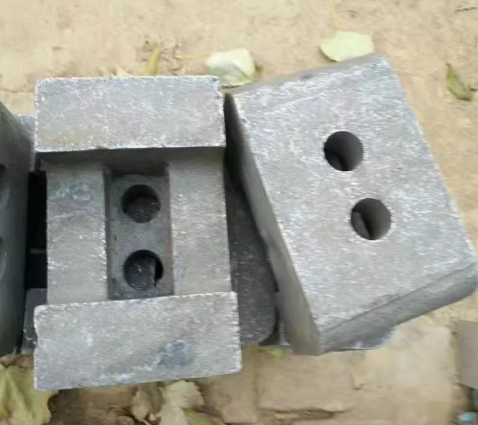
1. Crusher Rectangular (Plate-shaped) Hammers
- Features: This is one of the most common shapes, offering a large striking surface. It provides strong impact force and is suitable for crushing medium hard materials. The rectangular shape ensures good wear resistance and is relatively easy to manufacture and replace.
- Advantages: High crushing efficiency, simple structure.
- Disadvantages: May wear unevenly if the material is highly abrasive.
2. Crusher Square Hammers
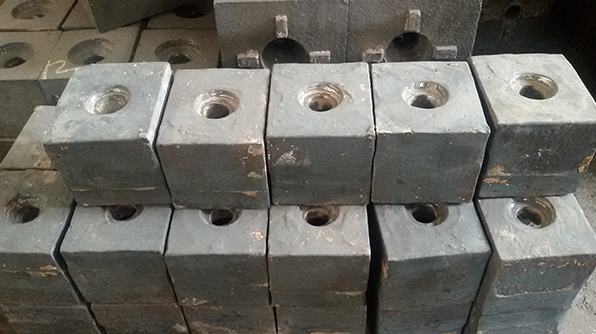
- Features: Square hammerheads have equal sides, providing a balanced impact area. They are often used for crushing materials with uniform hardness. The symmetry allows for reversible use, extending the hammerhead’s lifespan.
- Advantages: Longer service life due to reversible design, stable performance.
- Disadvantages: Smaller contact area compared to rectangular shapes, which may reduce crushing capacity for some materials.
3. Crusher Ring-shaped (Annular) Hammers
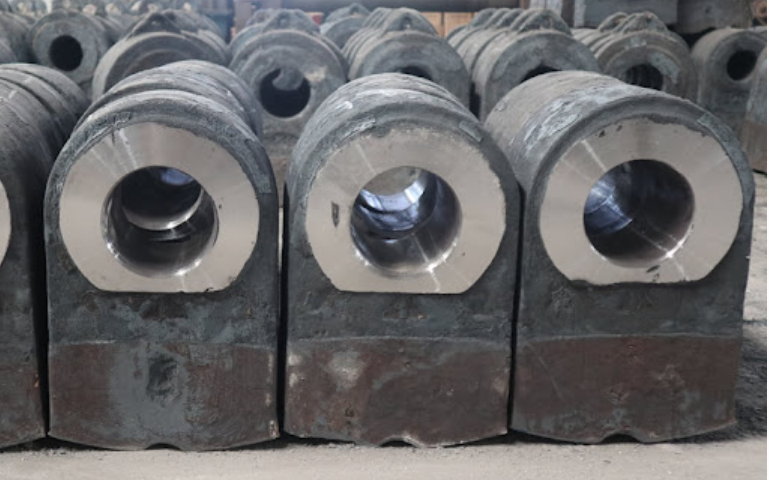
- Features: These hammerheads are circular or ring like and are typically used in ring hammer crushers. They are effective for crushing brittle or less abrasive materials, such as coal or limestone, due to their continuous contact with the material.
- Advantages: Uniform crushing, good for fine particle sizes, less prone to clogging.
- Disadvantages: Limited to softer materials, less effective for high hardness rocks.
4. Crusher Trapezoidal Hammers
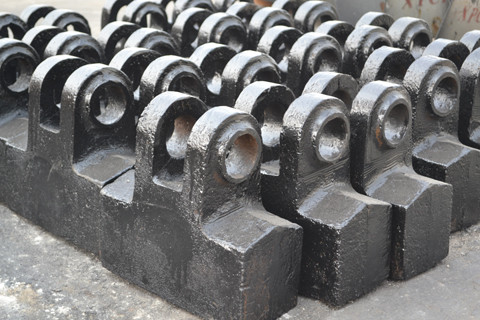
- Features: The trapezoidal shape has a wider base and narrower top, allowing for a gradual increase in impact force as the material is crushed. It’s suitable for crushing materials with varying hardness levels.
- Advantages: Better wear distribution, improved crushing efficiency.
- Disadvantages: More complex to manufacture, potentially higher cost.
5. Crusher Composite or Multi-sectional Hammers
- Features: These hammerheads combine different shapes or materials (e.g., a high wear resistant tip with a tougher base). They are designed to optimize both durability and crushing performance for specific applications.
- Advantages: Customization for specific needs, extended lifespan, high efficiency.
- Disadvantages: Higher production cost, more complex installation.
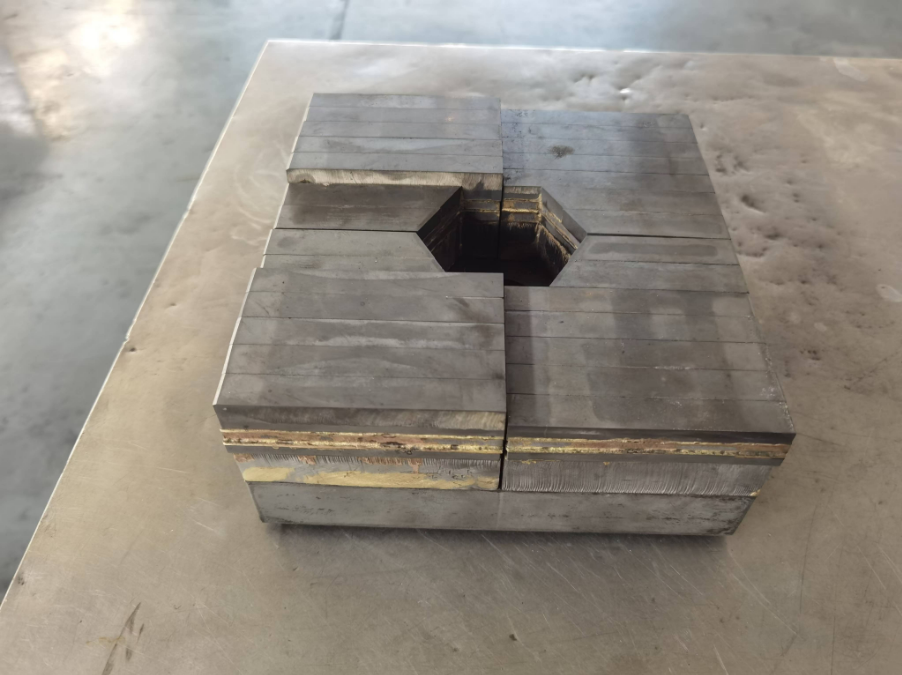
A mining crusher hammer is typically designed in the shape of an isosceles trapezoid, a type of quadrilateral with a pair of parallel sides (the bases) and a pair of opposite sides where the non-parallel sides (legs) are equal in length. This sided polygon geometry ensures balanced weight distribution and optimal performance under high impacts. Manufactured from high quality manganese steel, the hammer undergoes work hardening during operation, significantly enhancing its impact resistance and wear resistance. For even greater durability in high temperature environments, advanced variants incorporate silicon carbide (SiC) powder or gallium nitride reinforcements, making them exceptionally resistant to abrasion and extreme conditions.
General Characteristics of Crusher Hammer:
Material: Typically made from high manganese steel, alloy steel, or other wear resistant materials to withstand repeated impacts and abrasion.Wear Patterns: The shape influences how evenly the hammerhead wears reversible designs (like square or rectangular) help maximize usage.Application: The choice of shape depends on the material being crushed (e.g., hardness, abrasiveness) and the desired output size.
In modern mining and aggregate crushing equipment, high performance carbide crusher hammers are often reinforced with extremely abrasion resistant materials such as tungsten carbide, silicon carbide, or aluminum oxide (alumina) ceramic inserts to achieve long time high performance under severe working conditions. The impact zones of these hammers frequently feature a pair of parallel sides forming an isosceles trapezoid shape (a special type of quadrilateral and four sided polygon) made of stainless steel or martensitic steel combined with square/rectangle carbide tiles or buttons. This isosceles trapezoid geometry ensures even stress distribution and maximum coverage of wear resistant material while maintaining high impact strength. Thanks to the outstanding abrasion resistance, high temperature stability, and ability to operate at high speed in horizontal shaft impactors, these hybrid hammers deliver exceptional service life in tough industrial applications. For reference, the area of a trapezoid is calculated as [(a + b) × h]/2 and the perimeter of a trapezoid is a + b + c + d, where a and b are the lengths of the parallel sides.
“Zhuzhou Old Craftsman Precision Alloy Co., Ltd. could make tungsten carbide crusher hammer and make your crusher hammer use life is tens of times longer than before! We specialize in providing customized carbide solutions to meet the demanding requirements of industries such as aerospace, automotive, mining, and precision machining.”
Belt scraper Brazing brazingprocess CARBDIE HAMMER carbide Carbide belt scraper carbidebrazing carbide hammer Crusher CRUSHER HAMMER Informational Internal stress metal mining Refractory Brick Mold Secondary belt cleaner scraper stresses VSI crusher wear plates welding