
If you work in mining, aggregate processing, or bulk material handling, you know the battlefield. It’s a world of constant abrasion, high-impact shock, and corrosive dust. In this environment, standard conveyor belt cleaners often fail within weeks—stripped of their cutting edges and leaving carryback to wreak havoc on your rollers and frames.
Enter the heavyweights of the industry: Vacuum Brazed Carbide Conveyor Belt Cleaners. These tools don’t just scrape belts; they outlast hard-faced steel blades by a factor of 5 to 1. But what makes them so incredibly tough?
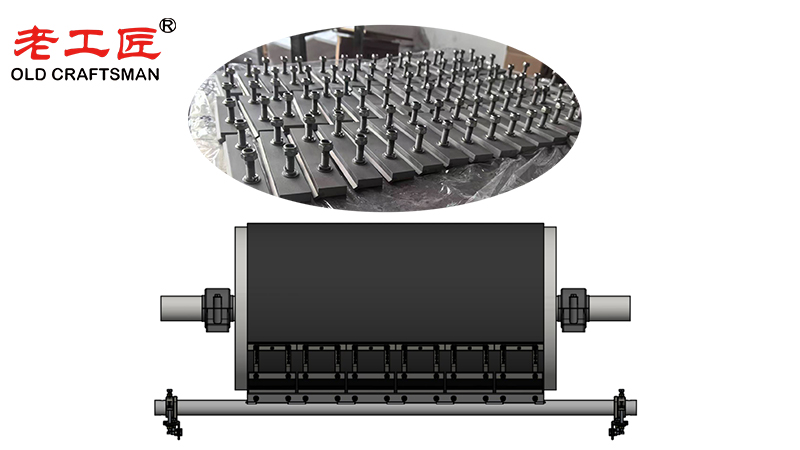
Let’s break down the science and engineering behind their durability.
1. The Power of Tungsten Carbide
The foundation of the durability is the material itself. Tungsten Carbide is one of the hardest materials on the planet—second only to diamond on the Mohs scale.
Unlike tool steel or urethane, carbide does not “smear” under pressure. It fractures material on contact. When you run thousands of tons of sharp rock or sintered ore over a blade, standard metals deform. Carbide retains its sharp, aggressive profile. However, raw carbide is brittle. If you simply bolt a solid chunk of carbide to a holder, it will shatter the moment a piece of tramp metal or a spliced joint hits it. This is where the “vacuum brazing” changes the game.
2. Vacuum Brazing: The Zero-Oxidation Bond
“Brazing” is a method of joining metals using a filler metal, but “vacuum brazing” is a specialized process that occurs in a sealed chamber with no oxygen.
Why does a lack of oxygen matter? In standard welding or torch brazing, oxygen creates oxide layers on the metal. These oxides act like grease on a windshield—they prevent a true molecular bond. In a vacuum furnace, the environment is inert. This allows the braze alloy (often a nickel-silver mix) to flow perfectly across every microscopic groove of the carbide tip and steel backing plate.
The result is a metallurgical bond with 100% wetting. There are no voids, no trapped flux, and no weak spots. This prevents “carbide pop-off”—the #1 failure mode where tips fall off the blade during vibration.
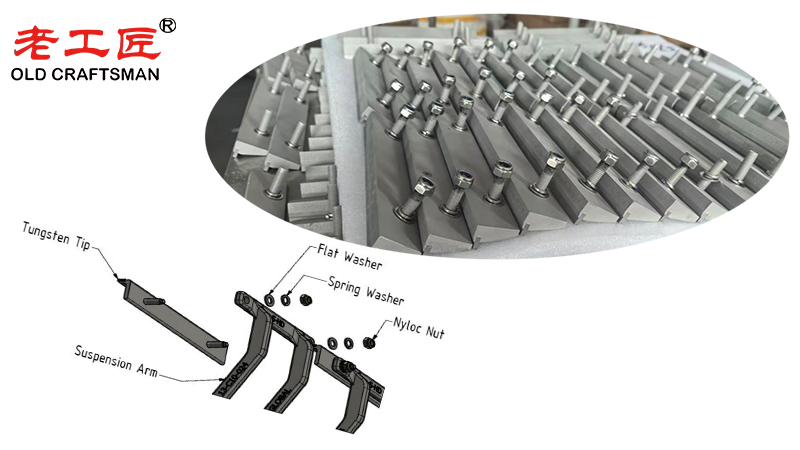
3. Superior Impact Resistance
Because the vacuum brazing process eliminates thermal stress (heating and cooling happens uniformly), the carbide is left in a pre-stressed, resilient state. When a metal fastener or a chunk of hard rock hits the cleaner, the brazed joint flexes slightly to absorb the shock without cracking.
Competitors using epoxy or mechanical clamping cannot handle thermal expansion or contraction. Over time, gaps form behind the carbide. Water seeps in, freezes, or dust erodes the backing. Vacuum brazing creates a watertight, crevice-free seal that prevents undercutting.
4. Wear Consistency
Durability isn’t just about lasting longer; it’s about working longer. As a vacuum brazed carbide cleaner wears, the wear pattern remains flat and straight. The carbide matrix is uniform, so it doesn’t develop grooves. This constant “self-sharpening” action maintains constant belt contact pressure, reducing belt wear and ensuring your conveyor runs efficiently until the last millimeter of carbide is gone.
The Bottom Line
When you combine the extreme hardness of tungsten carbide with the flawless bonding of vacuum brazing, you get a blade that doesn’t just clean—it survives.
In an industry where downtime costs thousands of dollars per hour, the durability of vacuum brazed carbide cleaners translates directly to your bottom line. They withstand the heat of high-speed belts, the cold of frozen concentrates, and the abrasion of silica dust.
Simply put: Other cleaners wear out. Vacuum brazed carbide cleaners are forged to last. If you want to stop changing blades every month and start focusing on production, this is the technology that gets the job done.
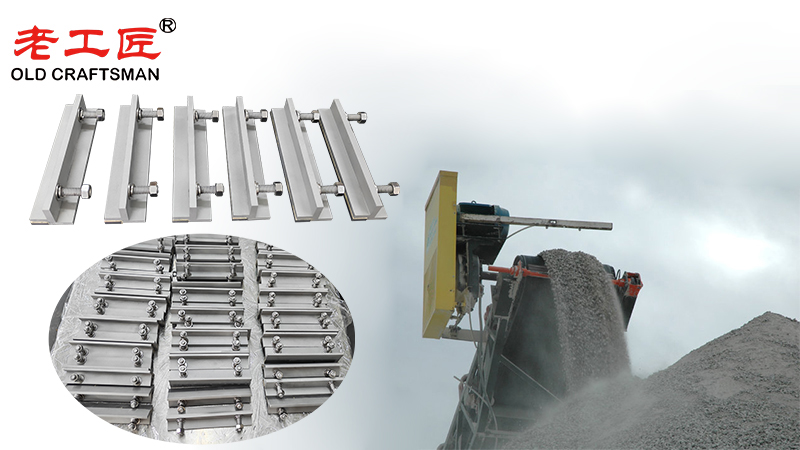
“Zhuzhou OC Precision Alloy Co., Ltd. could make tungsten carbide wear parts and make your equipment use life is tens of times longer than before! We specialize in providing customized carbide wear products solutions to meet the demanding requirements of industries such as aerospace, automotive, mining, and precision machining.”
Belt scraper Brazing brazingprocess carbide Carbide belt scraper carbidebrazing carbide hammer Crusher CRUSHER HAMMER HPGR HPGR feed chute liner Informational Internal stress metal mining Refractory Brick Mold Secondary belt cleaner scraper stresses VSI crusher wear plates welding