
In the brutal environment of mining, vacuum brazed carbide scrapers consistently outperform traditional welded types because they solve the single biggest point of failure: the bond between the carbide and the steel base. While welding introduces heat-related weaknesses that lead to premature failure, vacuum brazing creates a flawless, impact-resistant joint that lasts.
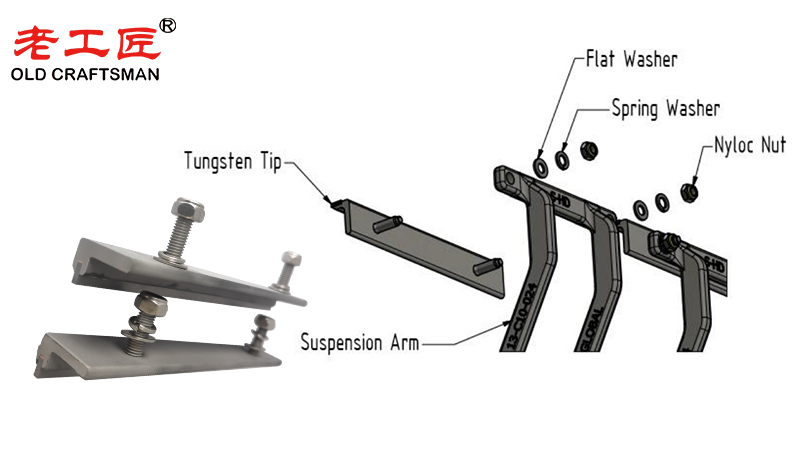
Here is the technical breakdown of why “Old Craftsman” style vacuum brazing is superior:
1. The Metallurgical Failure of Welding
Traditional welded scrapers rely on extreme heat (often exceeding 1400°C) to attach carbide tips. This process creates a Heat Affected Zone (HAZ) which causes two fatal flaws in mining applications:
- Micro-cracks: The rapid expansion and cooling create microscopic fractures within the carbide. Under the stress of scraping heavy ore, these cracks propagate until chunks of the tip break off.
- Decarburization: High heat burns off the Cobalt binding agents in the carbide, leaving the cutting edge softer and prone to rapid, uneven wear.
2. The Vacuum Brazing Advantage
The vacuum brazing process occurs in an oxygen-free environment. This allows a specialized filler alloy to bond the carbide to the steel at lower, controlled temperatures without melting the base metals.
- No Oxidation: Without oxygen, there are no weak oxide layers or air pockets at the joint. The result is a seamless, bubble-free metallurgical bond.
- Uniform Integrity: The gentle, uniform heating prevents thermal shock. This keeps the carbide’s hardness intact (rated up to 92.5 HRA, second only to diamond) and preserves its natural impact resistance.
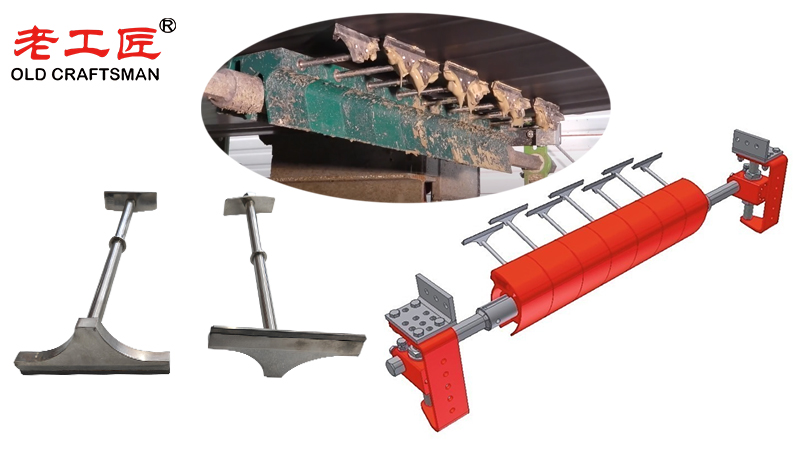
3. Performance Comparison: Field Results
When comparing the two technologies directly on a mine site, the differences are stark:
| Feature | Welded Scrapers | Vacuum Brazed Scrapers (OLD CRAFTSMAN) |
|---|---|---|
| Bond Integrity | Weak points due to oxidation and micro-cracks | Seamless, bubble-free, stronger than the base metal |
| Impact Resistance | Brittle; tips snap off when hitting belt splices or large rocks | High ductility; absorbs shock without fracturing |
| Wear Life | Short, unpredictable failure (chunking) | 3 to 5 times longer; wears down evenly |
| Edge Retention | Uneven wear creates “galleries” (grooves) that let material pass | Self-sharpening effect maintains a clean, sharp edge |
4. Real-World Impact on Operations
Switching from welded to vacuum brazed technology directly affects the mine’s bottom line:
- Reduced Downtime: Welded blades fail unexpectedly, requiring emergency shutdowns. Vacuum brazed blades wear down gracefully, allowing for scheduled maintenance. Mines report up to a 25-30% reduction in unplanned downtime.
- Lower Maintenance Costs: Because the carbide stays attached and wears slower, maintenance crews are not constantly changing blades. Users report maintenance cost reductions of up to 40%.
- Belt Protection: A broken welded scraper can leave a gap that allows sharp material to grind against the belt, or the broken carbide itself can fall into the chute and slice the belt. Vacuum brazed scrapers stay intact, protecting the multi-million dollar conveyor belt .
Summary
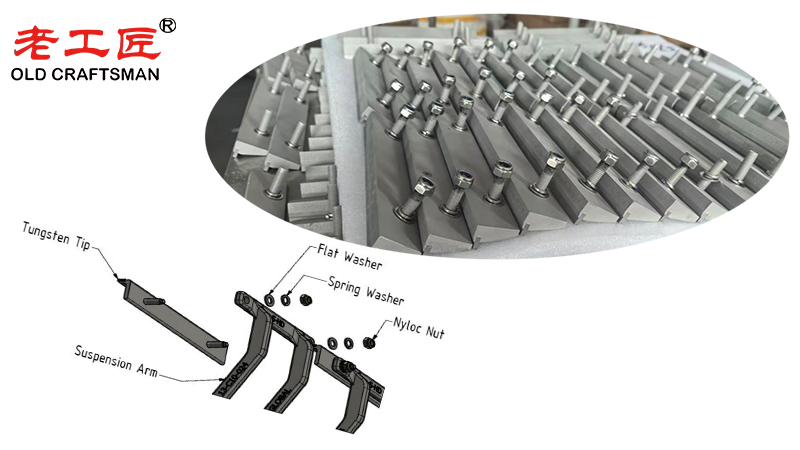
If you are dealing with carryback and frequent scraper changes, the issue is likely the welded joint failing, not the carbide wearing out. Vacuum brazing eliminates the heat damage and oxidation of welding, resulting in a scraper that lasts 3-5x longer and holds its edge like a “shark tooth” against the belt.
“Zhuzhou OC Precision Alloy Co., Ltd. could make tungsten carbide wear parts and make your equipment use life is tens of times longer than before! We specialize in providing customized carbide wear products solutions to meet the demanding requirements of industries such as aerospace, automotive, mining, and precision machining.”
Belt scraper Brazing brazingprocess CARBDIE HAMMER carbide Carbide belt scraper carbidebrazing carbide hammer Crusher CRUSHER HAMMER Informational Internal stress metal mining Refractory Brick Mold Secondary belt cleaner scraper stresses VSI crusher wear plates welding