
Carryback—the material that sticks to the conveyor belt after the main load is dumped—is a persistent operational headache. When standard cleaners (polyurethane, rubber, or even standard carbide-tipped blades) fail, the consequences are immediate and costly:
- Equipment Damage: Stuck material acts like sandpaper on return rollers and pulleys, drastically shortening the life of your belt.
- Safety Hazards: Fallen material creates slippery walkways and generates hazardous airborne dust when dry.
- Operational Waste: Inefficient cleaning leads to significant product loss and requires hundreds of labor hours for clean-up (one facility required 30 hours of manual cleaning per week before upgrading) .
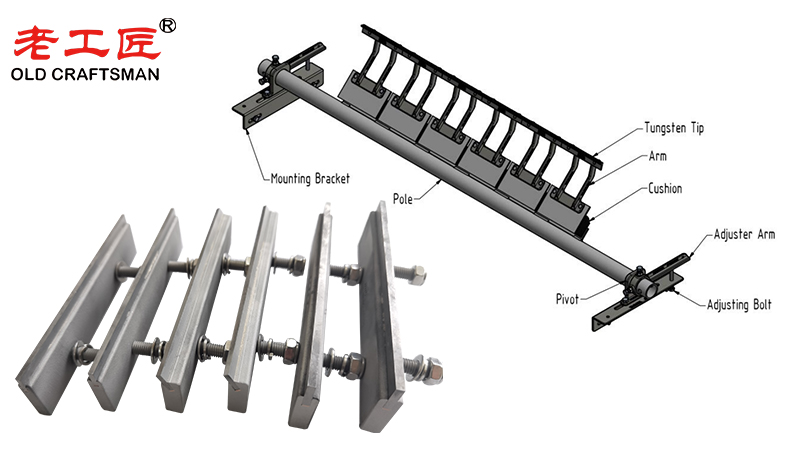
While Primary cleaners handle the bulk of the discharge, Secondary cleaners are the critical line of defense for removing the fines and sticky residue hidden in belt divots and cracks. If your current secondary cleaner fails to create a “carryback-free” return belt, you need to upgrade the technology.
Material Comparison: The End of the “Tip-Off” Era
Not all carbide is created equal. Standard tungsten carbide blades often fail not because the material is soft, but because the tips detach from the base due to impact and vibration from belt splices.
| Cleaner Type | Typical Lifespan (Mining) | Primary Failure Mode |
|---|---|---|
| Polyurethane / Rubber | 2–4 months | Wears down instantly against abrasive ore; fails to scrape sticky material. |
| Standard Tungsten Carbide | 6–10 months | Tips “pop-off” due to mechanical splice impact; inconsistent cleaning pressure. |
| Vacuum Brazed Carbide | 8–18 months | No tip loss. Seamless bond lasts 3-5x longer than induction-welded options. |
The Solution: The Power of Vacuum Brazing
The “High Quality” distinction in conveyor cleaning comes down to the manufacturing process. Vacuum brazing is not standard welding.
- The Seamless Bond: Unlike induction welding (which creates weak points), vacuum brazing occurs in an oxygen-free furnace. This creates a metallurgical bond between the tungsten carbide and the stainless steel base that is actually stronger than the carbide itself.
- Zero Tip Loss: Because the bond is flawless, the blades withstand the violent shock of mechanical belt fasteners. This eliminates the #1 reason standard scrapers fail.
- Self-Sharpening Action: As the blade wears, fresh, sharp carbide particles are continuously exposed, maintaining aggressive cleaning power without constant manual adjustments.
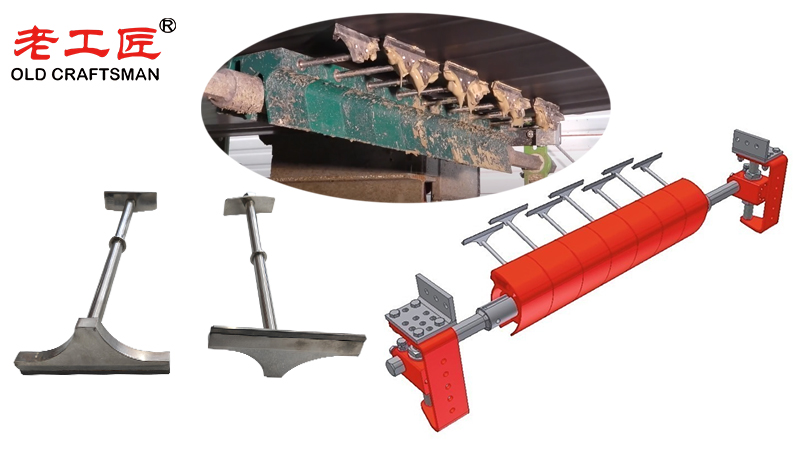
Performance Results: Quantifiable Carryback Reduction
When mining and processing plants switch to vacuum brazed systems, the reduction in carryback is immediate and measurable.
1. Elimination of Fines and Sticky Material
- High Efficiency: Systems utilizing these blades achieve 98-99% carryback reduction, leaving the return side of the belt essentially clean.
- Reversing Conveyors: Even on difficult reversing conveyors with mechanical fasteners, vacuum-brazed carbide solutions have demonstrated an 85% reduction in carryback, drastically cutting cleanup time from 30 hours to just 4 hours per week.
2. Extreme Durability in Harsh Conditions
These cleaners are designed for the toughest environments, handling everything from iron ore to wet aggregates.
- Temperature Range: Operates reliably from -40°C to 300°C.
- Wear Resistance: Hardness reaches up to 92.5 HRA, outlasting steel or rubber blades by factors of 3x to 10x depending on the material.
3. Belt and Component Protection
A dirty belt acts like sandpaper on your equipment.
- Extends Belt Life: By removing abrasive residue, the cleaner eliminates the friction that wears down conveyor belts and idlers, potentially extending the life of a multi-million dollar belt by years.
- Splice Safety: High-quality designs feature cushioned cartridges or specific angles to deflect safely over belt splices without causing damage, unlike rigid, aggressive scrapers.
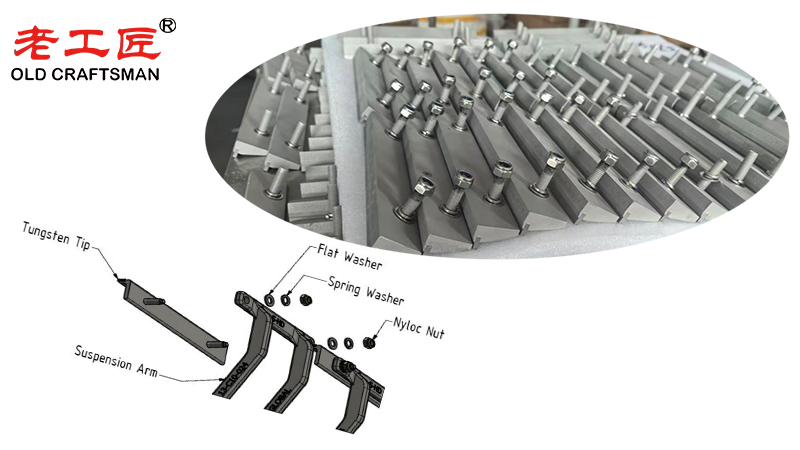
Economic Impact: Total Cost of Ownership (TCO)
While the upfront cost of a vacuum brazed carbide cleaner is higher (approx. 30-50% more than standard), the return on investment (ROI) is rapid—often less than three months.
| Cost Factor | Standard Cleaner (Steel/Urethane) | Vacuum Brazed Carbide Cleaner |
|---|---|---|
| Service Life | 6–12 weeks | 8–12 months (3-5x longer) |
| Maintenance Costs | Baseline (High) | Up to 40% reduction |
| Downtime | Frequent replacements | 25-30% reduction in downtime |
| Annual Operating Cost | ~$3,800 (Labor + Parts) | ~$1,350 (65% lower) |
By switching to a high-quality vacuum-brazed carbide secondary cleaner, operators move from a cycle of constant maintenance and spill cleanup to a proactive strategy of continuous production and workplace safety.
“Zhuzhou OC Precision Alloy Co., Ltd. could make tungsten carbide wear parts and make your equipment use life is tens of times longer than before! We specialize in providing customized carbide wear products solutions to meet the demanding requirements of industries such as aerospace, automotive, mining, and precision machining.”
Belt scraper Brazing brazingprocess CARBDIE HAMMER carbide Carbide belt scraper carbidebrazing carbide hammer Crusher CRUSHER HAMMER Informational Internal stress metal mining Refractory Brick Mold Secondary belt cleaner scraper stresses VSI crusher wear plates welding