
Intensive mixers processing abrasive materials like iron ore fines, cement, or mineral fillers face a persistent challenge: rapid blade wear. This leads to frequent replacements, costly downtime, and inconsistent mixing quality. Fortunately, several proven strategies can significantly extend blade service life. Intensive mixers are widely used in industries such as refractory materials, ceramics, chemicals, construction materials, powder metallurgy, and advanced composites. During continuous mixing, the blades are exposed to abrasive powders, high-speed impact, friction, and repeated mechanical loads. These demanding conditions can cause rapid blade wear and lead to frequent replacement and production downtime.
Using tungsten carbide intensive mixer blades and optimizing blade design, material selection, and operating conditions can significantly improve service life in abrasive applications.
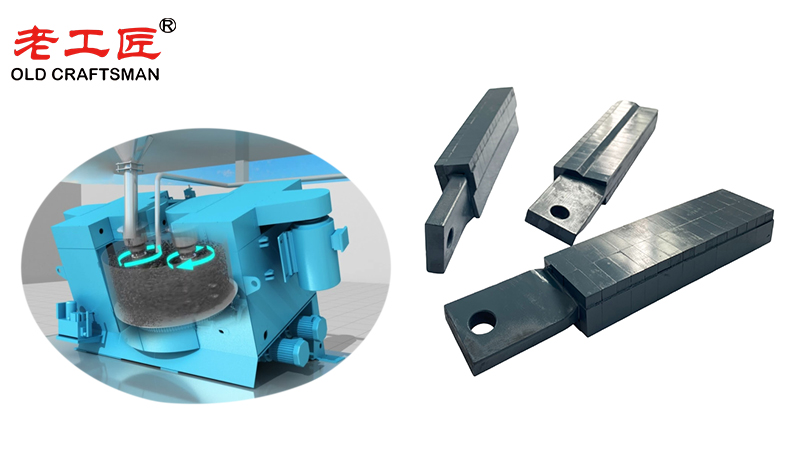
1. Choose a Wear-Resistant Blade Material
The material of the mixer blade is one of the most important factors affecting service life.
Conventional alloy steel blades can provide good mechanical strength, but they may wear quickly when processing highly abrasive materials. Tungsten carbide offers extremely high hardness and excellent resistance to abrasive wear, making it suitable for intensive mixing applications.
Carbide grades with an appropriate combination of hardness, toughness, and cobalt content can help the blade withstand continuous contact with abrasive particles while reducing premature chipping or cracking.
For particularly demanding applications, vacuum-brazed tungsten carbide blades can combine a wear-resistant carbide working surface with a strong steel body.
2. Optimize the Carbide Grade
Not every application requires the same tungsten carbide grade.
A harder grade may provide excellent resistance against sliding abrasion, while a tougher grade can be more suitable when the mixer experiences significant impact or vibration.
When selecting a carbide grade, manufacturers should consider:
- Abrasiveness of the mixed material
- Particle size and hardness
- Mixing speed
- Impact load
- Operating temperature
- Required service life
- Blade geometry and thickness
Selecting the grade according to the actual working conditions can prevent unnecessary cost while maintaining reliable wear performance.
3. Improve Blade Geometry
Blade geometry directly affects both mixing efficiency and wear distribution.
Sharp edges, unsuitable angles, or excessive contact pressure can create localized wear zones. A properly designed blade can distribute the load more evenly and reduce concentrated abrasion.
Important design factors include:
- Blade thickness
- Working angle
- Carbide coverage area
- Cutting or mixing edge geometry
- Radius and chamfer design
- Mounting dimensions
For custom intensive mixer blades, the carbide area can be positioned according to the actual wear pattern of the equipment.
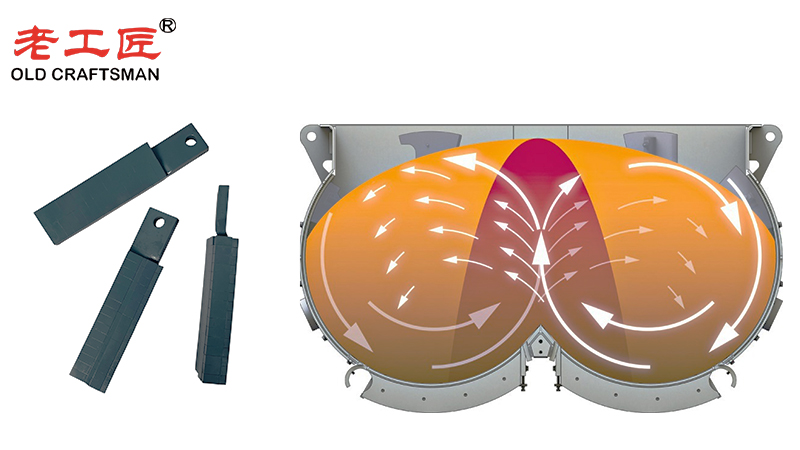
4. Use Vacuum Brazing for Reliable Carbide Attachment
For carbide-tipped intensive mixer blades, the connection between the carbide and steel body is critical.
Poor brazing can result in carbide detachment, cracking, or premature failure even when the carbide itself has excellent wear resistance.
Vacuum brazing provides a controlled joining environment and can produce a strong and consistent bond between tungsten carbide and the steel substrate. Proper brazing temperature, surface preparation, filler material, and process control are important for achieving reliable performance.
5. Control the Mixing Conditions
Even a high-quality carbide blade can experience accelerated wear if the mixer is operated outside its intended conditions.
To extend blade life, operators should control:
- Mixing speed
- Material loading
- Mixing time
- Feed consistency
- Temperature
- Foreign metal contamination
- Excessive impact or vibration
Large metal particles or other hard contaminants can cause impact damage to carbide edges. Preventing these contaminants from entering the mixer can significantly reduce unexpected blade failure.
6. Inspect Blades Regularly
Regular inspection helps identify wear before it becomes a serious production problem.
Operators should check for:
- Carbide edge wear
- Carbide cracking
- Brazing joint damage
- Abnormal deformation
- Localized wear
- Loose or missing carbide pieces
- Changes in mixing performance
Monitoring the wear pattern can also provide valuable information for improving the next blade design.
7. Consider Customized Tungsten Carbide Intensive Mixer Blades
Standard blades may not always provide the best performance for every mixing application. Customized blades can be designed according to the equipment model, installation dimensions, material characteristics, and actual wear conditions.
A customized solution may include:
- Different carbide grades
- Customized blade dimensions
- Optimized carbide thickness
- Increased carbide coverage in high-wear areas
- Customized brazing structures
- Special edge geometry
- OEM replacement dimensions
This approach allows the blade to be designed around the actual application rather than simply replacing a standard component.
Conclusion
Improving intensive mixer blade service life requires more than simply choosing a harder material. The best results come from combining wear-resistant tungsten carbide, suitable carbide grade selection, optimized blade geometry, reliable vacuum brazing, proper operating conditions, and regular inspection.
For abrasive mixing applications, tungsten carbide intensive mixer blades can provide a practical solution for reducing wear, extending replacement intervals, and maintaining stable mixing performance.
Old Craftsman manufactures customized tungsten carbide wear parts and vacuum-brazed carbide components for demanding industrial applications. With customized dimensions, carbide grades, and wear protection designs, the blades can be developed according to specific mixer models and working conditions.
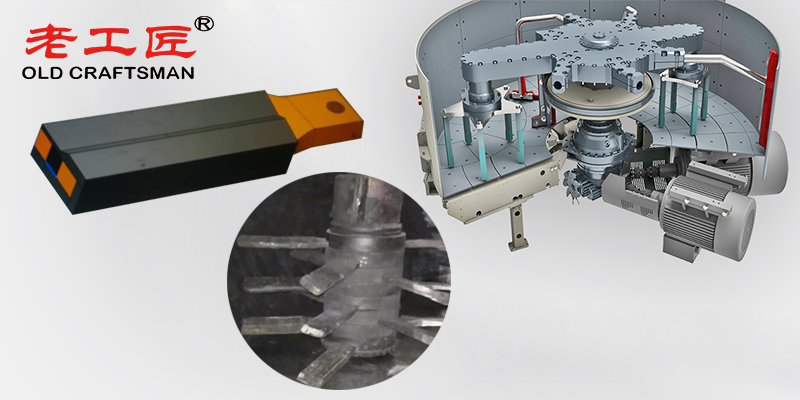
Beyond tungsten carbide mixer blades, our extensive portfolio includes a broad spectrum of solutions specifically designed for industries demanding exceptional wear and impact resistance. Our premium offerings include HPGR Wear Parts, durable mining wear liner plates, mining carbide conveyor belt cleaner, specialized components for sand-making machines, protective linings for refractory brick molds, and efficient crusher hammers.
“Zhuzhou OC Precision Alloy Co., Ltd. could make tungsten carbide wear parts and make your equipment use life is tens of times longer than before! We specialize in providing customized carbide wear products solutions to meet the demanding requirements of industries such as aerospace, automotive, mining, and precision machining.”
Belt scraper Brazing brazingprocess carbide Carbide belt scraper carbidebrazing carbide hammer Crusher CRUSHER HAMMER HPGR HPGR feed chute liner Informational Internal stress metal mining Refractory Brick Mold Secondary belt cleaner scraper stresses VSI crusher wear plates welding