
When you think of a carbide scraper failing, you probably imagine the carbide tip chipping or the edge dulling. But experienced tool users know a more frustrating truth: the tip often falls off before it wears out.
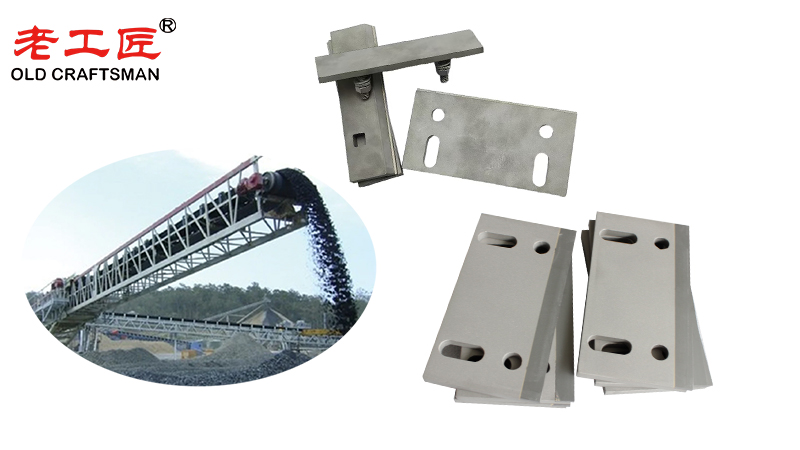
The culprit is rarely the carbide itself. It’s the thin, almost invisible layer of braze alloy holding the two materials together. Get that layer wrong—specifically, get its thickness wrong—and your “tough” scraper becomes a brittle hazard.
The Goldilocks Zone of Braze Thickness
In brazing, thickness isn’t just about adhesion; it’s about stress mechanics. Carbide and steel have very different coefficients of thermal expansion. When a scraper hits a high-spot or a weld bead, the steel body flexes while the rigid carbide resists movement. The braze layer must absorb that sudden shear stress.
Industry standards (and physical testing) show that the ideal braze thickness for carbide scrapers is between 0.002 and 0.005 inches (0.05–0.12 mm).
Too Thin (Under 0.002”): The Glass Joint
If the braze layer is too thin, it behaves like a rigid glue line. There is no ductility. When impact occurs, the joint cannot flex; it simply transmits all the shock directly to the carbide-to-braze interface. This creates microscopic cracks immediately. Within a few hits, the braze fractures cohesively—the bond between the braze and carbide breaks cleanly. The tip pops off, often leaving a shiny, undisturbed surface. It looks like it wasn’t brazed at all.
Too Thick (Over 0.008”): The Sponge
At first glance, a thick braze layer seems safer—more glue equals more hold, right? Wrong. Thick braze layers introduce two major flaws:
- Porosity & Micro-shrinkage: As the thick layer cools, trapped gases form voids. These act as stress risers where cracks initiate.
- Low Shear Strength: Braze alloys (typically silver or nickel-based) are softer than steel or carbide. A thick layer acts like a shock absorber that is too soft. Under impact, the braze itself deforms plastically. The carbide doesn’t snap off; it slowly walks out of alignment, loses its edge geometry, or delaminates.
The 0.003” Sweet Spot
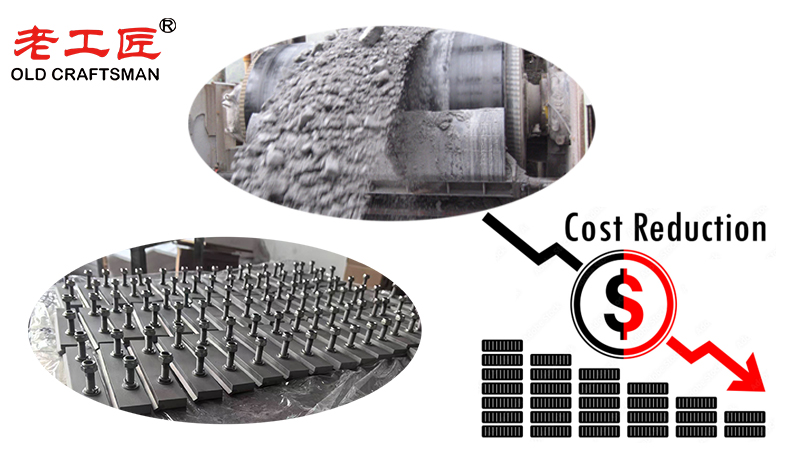
Testing repeatedly confirms that a controlled 0.003-inch (0.076 mm) layer provides the optimal modulus. At this thickness, the braze is thin enough to transfer the necessary force to cut material, yet thick enough to dampen the initial shock wave. It allows the steel substrate to flex slightly without snapping the brittle carbide tip.
Practical Takeaways for the Shop
- Don’t “Goop” It: Applying more paste or shim stock to fix a poor fit-up creates a thick, weak joint.
- Fit Matters: The best braze thickness comes from a tight, slip-fit mechanical gap. If your carbide shim rattles in the pocket, your braze is already too thick.
- Look for the Fillet: A proper braze shows a small, continuous fillet at the edge. If you see a large, bulging bead, the internal thickness is likely excessive and prone to fatigue.
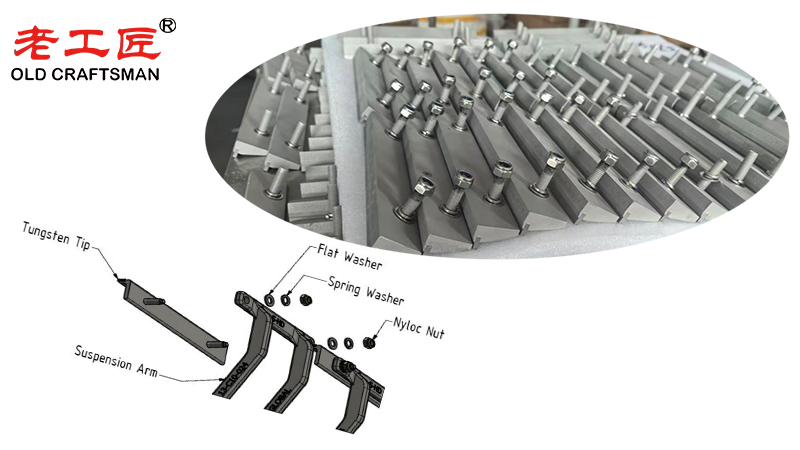
Remember: In brazing, thinner is stronger—but only down to a point. For impact resistance in carbide scrapers, the thickness isn’t just a variable; it’s the difference between a tool that chips and one that works. Keep it between two and five thousandths of an inch, and your scrapers will die by dulling—not by falling apart.
“Zhuzhou OC Precision Alloy Co., Ltd. could make tungsten carbide wear parts and make your equipment use life is tens of times longer than before! We specialize in providing customized carbide wear products solutions to meet the demanding requirements of industries such as aerospace, automotive, mining, and precision machining.”
Belt scraper Brazing brazingprocess CARBDIE HAMMER carbide Carbide belt scraper carbidebrazing carbide hammer Crusher CRUSHER HAMMER Informational Internal stress metal mining Refractory Brick Mold Secondary belt cleaner scraper stresses VSI crusher wear plates welding