
Cracking and chipping in refractory brick molds represent one of the most persistent challenges in refractory manufacturing. These defects not only compromise the dimensional accuracy of the green body but also accelerate mold wear, leading to increased downtime and production costs. Understanding the root causes of these failures is essential for implementing effective preventive measures.
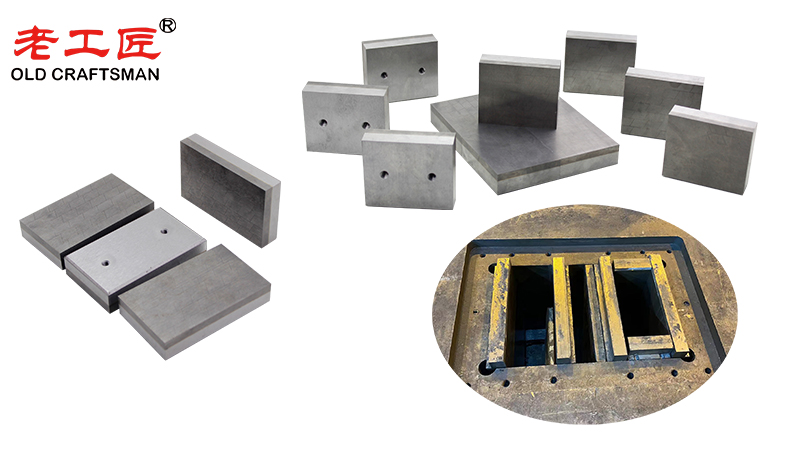
Selecting a suitable tungsten carbide refractory brick mold and controlling the manufacturing process are important for extending mold service life.
1. Select the Right Mold Material
Material selection is the first step in preventing cracks and chips. Refractory brick molds require a combination of high hardness, wear resistance, transverse rupture strength, and fracture toughness.
For severe abrasive applications, tungsten carbide is often used because it provides excellent resistance to abrasive wear. The carbide grade should be selected according to the molding material, pressure, production volume, and expected service conditions rather than simply choosing the hardest grade available.
A grade with excessively high hardness but insufficient toughness may be more susceptible to edge chipping or cracking under impact.
2. Optimize Mold Wall Thickness
Insufficient wall thickness can create excessive stress concentrations during pressing. However, simply making the mold thicker is not always the best solution.
The mold design should provide sufficient structural strength while maintaining uniform wall thickness where possible. Sharp transitions, thin sections, and sudden changes in geometry should be minimized because they can concentrate stress and become starting points for cracks.
3. Avoid Sharp Corners
Sharp internal and external corners are common locations for crack initiation.
Where the application permits, adding a small radius or chamfer to vulnerable edges can reduce stress concentration. Proper edge treatment also helps protect the mold from chipping during installation, handling, and production.
4. Control the Pressing Process
Excessive or uneven pressing pressure can generate localized stresses in the mold. Misalignment between the mold, punch, and pressing equipment can make the problem worse.
Before production, operators should check:
- Punch and mold alignment
- Pressing pressure
- Filling uniformity
- Powder distribution
- Mold positioning
- Equipment vibration and abnormal impact
Consistent pressing conditions help reduce mechanical shock and uneven loading.
5. Maintain Proper Surface Finish
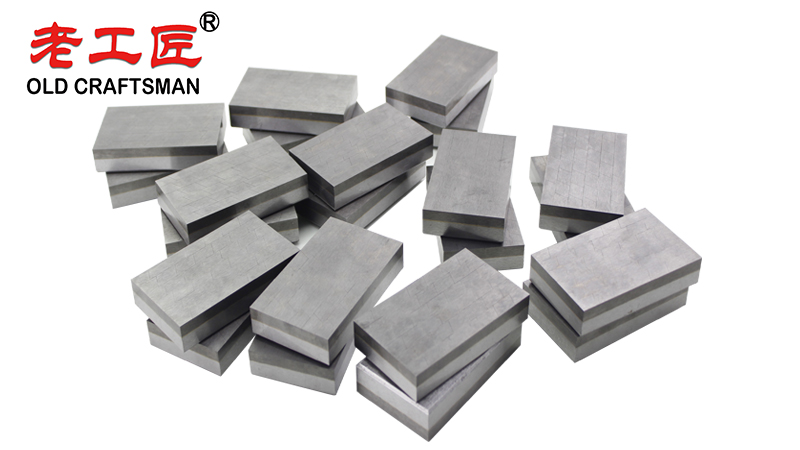
A rough or damaged mold surface can increase friction and create stress concentrations. Proper grinding and polishing of the working surfaces can improve demolding performance and reduce localized mechanical stress.
For tungsten carbide molds, grinding should be controlled carefully to avoid overheating, grinding cracks, or excessive material removal.
6. Prevent Thermal Shock
Repeated heating and cooling can generate thermal stresses, particularly when temperature changes are rapid or uneven.
Where the mold is exposed to elevated temperatures, controlled heating and cooling procedures should be used. Avoid sudden temperature changes whenever possible and ensure that the mold is heated uniformly.
7. Inspect the Mold Regularly
Early detection can prevent a small defect from becoming a major failure.
Before and during production, inspect the mold for:
- Edge chipping
- Hairline cracks
- Surface wear
- Deformation
- Abnormal scratches
- Changes in dimensional accuracy
For critical molds, dimensional inspection and appropriate non-destructive inspection methods can help identify potential problems before failure occurs.
8. Use a Reliable Manufacturing Process
For tungsten carbide refractory brick molds, manufacturing quality directly affects service life. Proper powder mixing, pressing, sintering, grinding, and final inspection are essential.
A controlled production process helps ensure uniform carbide distribution, consistent density, accurate dimensions, and reliable mechanical properties.
Conclusion
Cracking and chipping in refractory brick molds are usually associated with a combination of material selection, mold geometry, pressing conditions, thermal stress, surface quality, and manufacturing consistency. A properly designed tungsten carbide mold with suitable toughness and wear resistance can provide stable performance in demanding refractory brick production.
For manufacturers and users, the most effective approach is to optimize the material grade, mold design, pressing parameters, surface finish, and inspection process together, rather than focusing on hardness alone.
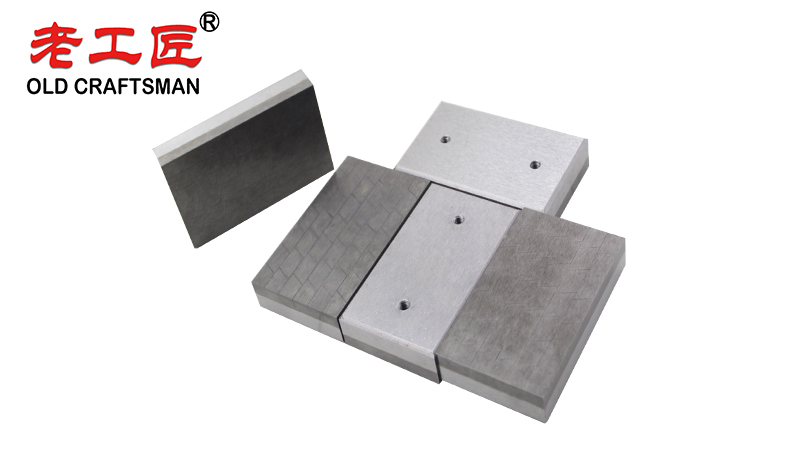
Beyond refractory brick molds, our extensive portfolio includes a broad spectrum of solutions specifically designed for industries demanding exceptional wear and impact resistance. Our premium offerings include HPGR Wear Parts, durable mining conveyor belt cleaner, robust crusher hammer heads, specialized components for sand-making machines, protective linings for carbide wear liners, and efficient intensive mixer blades.
“Zhuzhou OC Precision Alloy Co., Ltd. could make tungsten carbide wear parts and make your equipment use life is tens of times longer than before! We specialize in providing customized carbide wear products solutions to meet the demanding requirements of industries such as aerospace, automotive, mining, and precision machining.”
Belt scraper Brazing brazingprocess carbide Carbide belt scraper carbidebrazing carbide hammer Crusher CRUSHER HAMMER HPGR HPGR feed chute liner Informational Internal stress metal mining Refractory Brick Mold Secondary belt cleaner scraper stresses VSI crusher wear plates welding