
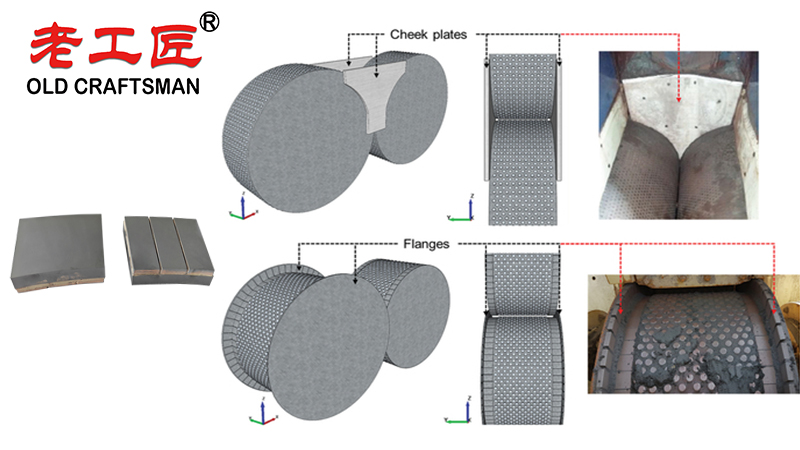
In the high-stakes world of mineral processing, High-Pressure Grinding Rolls (HPGRs) are the workhorses that crush ore into valuable particles. But they face a constant enemy: extreme abrasion. The flanges—the raised edges that contain the material bed—take the brunt of this punishment. This is where vacuum-brazed tungsten carbide flanges are making a significant impact.
Vacuum brazed HPGR carbide flanges have become a preferred solution due to their exceptional wear resistance and long service life.
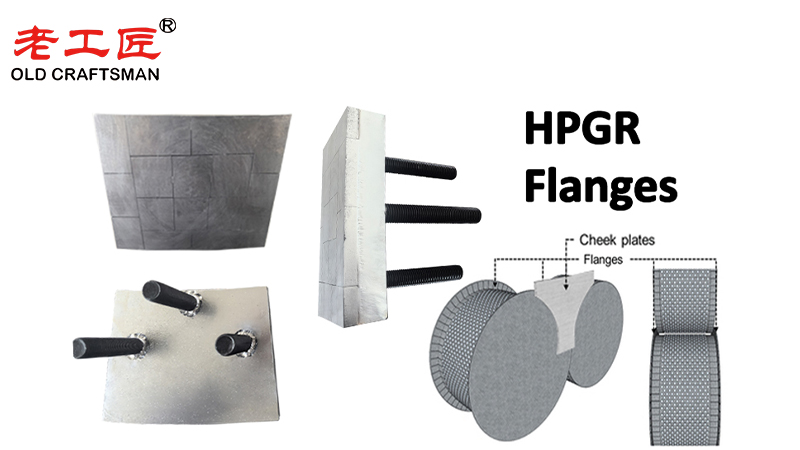
What Are Vacuum Brazed HPGR Carbide Flanges?
Vacuum brazed HPGR carbide flanges are composite wear components manufactured by brazing tungsten carbide segments onto a high-strength steel base under a high-vacuum environment. The vacuum brazing process creates a clean, oxidation-free metallurgical bond that is significantly stronger than conventional welding or adhesive bonding methods.
The tungsten carbide surface provides outstanding hardness, while the steel substrate absorbs impact loads and offers excellent structural support. This combination ensures both durability and reliability under harsh operating conditions.
How Vacuum Brazing Improves Wear Resistance
1. Superior Bonding Strength
Vacuum brazing forms a continuous metallurgical bond between the carbide and steel without oxidation or contamination. This minimizes the risk of carbide segment separation even during heavy-duty crushing operations.
2. Exceptional Abrasion Resistance
Tungsten carbide has a hardness of approximately HRA 89–92, making it highly resistant to abrasive materials such as iron ore, copper ore, gold ore, limestone, and quartz. The carbide surface significantly slows wear compared with conventional alloy steel components.
3. Excellent Impact Performance
HPGR flanges experience repeated impact from large ore particles. The steel backing absorbs shock while the carbide layer protects against abrasion, providing an ideal balance between hardness and toughness.
4. Uniform Wear Pattern
The precisely positioned carbide segments distribute wear evenly across the flange surface. Uniform wear helps maintain consistent roll geometry, improving grinding efficiency and reducing maintenance frequency.
5. Outstanding Heat Resistance
Vacuum-brazed joints remain stable under elevated operating temperatures generated during continuous crushing, ensuring reliable performance without premature bond failure.
Benefits for HPGR Operations
Using vacuum brazed carbide flanges provides several operational advantages:
| Benefit | Operational Value |
|---|---|
| Longer service life | Reduced replacement frequency |
| Higher wear resistance | Lower maintenance costs |
| Strong metallurgical bond | Reduced carbide detachment risk |
| Stable roll profile | Improved grinding efficiency |
| Reduced downtime | Increased equipment availability |
| Lower lifecycle cost | Higher return on investment |
Typical Applications
Vacuum brazed HPGR carbide flanges are widely used in:
- Iron ore processing
- Copper mining
- Gold mining
- Cement manufacturing
- Diamond processing
- Mineral beneficiation plants
- Aggregate and quarry operations
These industries demand wear components capable of operating continuously under severe abrasion and high-pressure conditions.
Conclusion
Vacuum brazed HPGR carbide flanges offer an effective solution for extending the service life of HPGR equipment. By combining the extreme hardness of tungsten carbide with the toughness of a steel substrate through advanced vacuum brazing technology, these flanges deliver superior wear resistance, impact durability, and long-term reliability. For mining and mineral processing operations seeking to reduce downtime, improve grinding efficiency, and lower maintenance costs, vacuum brazed HPGR carbide flanges are a smart investment that enhances both equipment performance and overall productivity.
“Zhuzhou OC Precision Alloy Co., Ltd. could make tungsten carbide wear parts and make your equipment use life is tens of times longer than before! We specialize in providing customized carbide wear products solutions to meet the demanding requirements of industries such as aerospace, automotive, mining, and precision machining.”
Belt scraper Brazing brazingprocess carbide Carbide belt scraper carbidebrazing carbide hammer Crusher CRUSHER HAMMER HPGR HPGR feed chute liner Informational Internal stress metal mining Refractory Brick Mold Secondary belt cleaner scraper stresses VSI crusher wear plates welding