
Keeping conveyor systems running clean is essential for minimizing carryback (material that sticks to the belt and returns on the underside), reducing spillage, preventing belt mistracking, lowering maintenance costs, and extending the life of belts, rollers, idlers, and other components. Effective cleaning solutions, particularly those using tungsten carbide (often called carbide cleaners or scrapers), deliver superior performance in demanding industries like mining, aggregates, coal handling, and bulk material transport.
In industries like mining, quarrying, and bulk material handling, carryback (material stuck to the conveyor belt) is one of the biggest operational headaches. It leads to increased maintenance costs, safety hazards, and equipment degradation.
Here is a comprehensive guide to keeping your conveyor system running clean using effective carbide cleaner solutions.
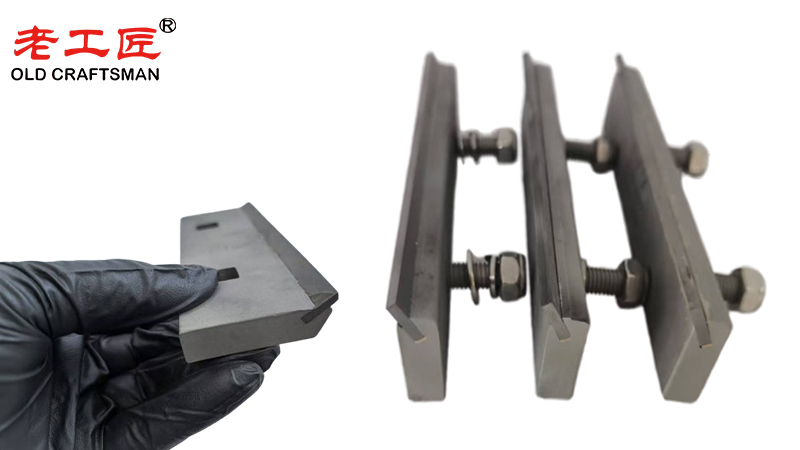
1. Why Carbide?
While polyurethane and rubber blades have their place, tungsten carbide is the industry standard for effective primary and secondary cleaning for several reasons:
- Extreme Hardness: Carbide is significantly harder than steel, allowing it to withstand constant abrasion from materials like granite, coke, or taconite without deforming.
- Heat Resistance: Carbide maintains its hardness at high temperatures, unlike polyurethane which can soften or “smear.”
- Longevity: A well-maintained carbide blade can last 3 to 5 times longer than steel or urethane alternatives, reducing downtime for blade changes.
2. The Three Stages of Effective Cleaning
A single cleaner rarely solves a carryback problem. For a system to run truly “clean,” you need a layered approach.
A. The Primary Cleaner (Pre-Cleaner)
Location: Just after the head pulley, at the 10 or 2 o’clock position (where the belt leaves the pulley).
Purpose: Removes the bulk of the material (up to 80-90%) from the belt surface.
Carbide Solution: Look for tungsten carbide tipped (TCT) blades mounted on a cushioned or articulated arm.
- Key Feature: The cleaner must maintain constant pressure against the belt despite pulley wear, belt splices, or fluctuations in belt tension. Mechanical tensioners (springs or rubber buffers) are superior to fixed mounts for carbide systems to prevent gouging.
B. The Secondary Cleaner
Location: Directly behind the head pulley, on the return side of the belt.
Purpose: Polishes the belt, removing the remaining fines and moisture. This is critical for preventing material buildup on the return rollers (which causes belt mistracking) and spillage along the conveyor frame.
Carbide Solution: Independent carbide segments mounted on a robust steel structure.
- Key Feature: The best designs use a staggered or chevron pattern of carbide inserts. This allows water and fines to escape sideways, preventing the cleaner from hydroplaning over a wet belt.
C. The Tertiary/Diagonal Cleaner (For Reversing Belts or Severe Sticky Material)
Location: Mounted diagonally on the return side.
Purpose: Used for belts that reverse direction (stacker/reclaimers) or for materials with high clay/moisture content. Diagonal cleaners slice material away rather than scraping directly against the splice direction.
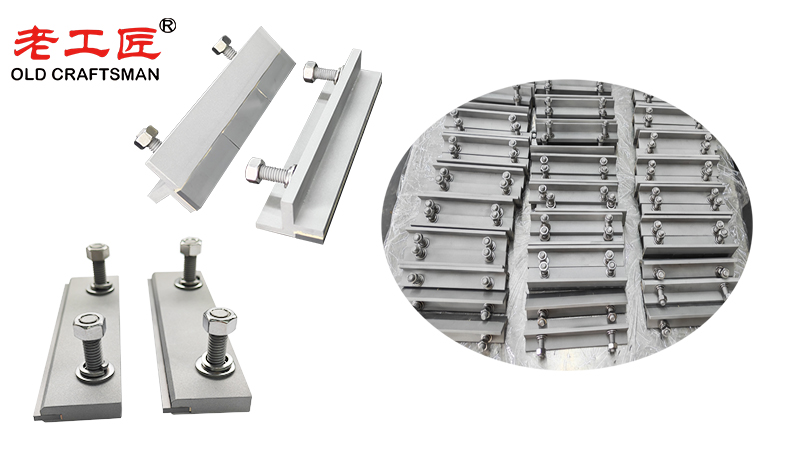
3. Key Features of High-Performance Carbide Cleaners
When selecting a solution, look beyond just the blade material. The mechanical system is equally important.
- Automatic Tensioning: The number one reason carbide cleaners fail is loss of tension. A effective system uses torsion springs, air springs, or rubber tensioners that automatically adjust as the blade wears down. This ensures the carbide tip remains in constant, uniform contact with the belt.
- Individual Segment Retention: Avoid welded or one-piece blades for heavy applications. Systems that use individually mounted carbide segments allow for quick replacement of only the worn section, rather than scrapping an entire blade when one corner is damaged.
- Splice Protection: Carbide is hard, but conveyor belt splices (mechanical fasteners) are harder. Effective cleaners utilize cushioning mechanisms that allow the blade to momentarily deflect when a mechanical splice passes, preventing catastrophic damage to both the belt and the cleaner.
4. Common Problems and Carbide Solutions
| Problem | Root Cause | Carbide Solution |
|---|---|---|
| Excessive Carryback | Worn primary cleaner; insufficient pressure. | Upgrade to a wide-profile carbide primary with a heavy-duty tensioner. Ensure the cleaner is mounted on a rotating shaft to follow pulley contours. |
| Belt Splicing Damage | Cleaner is too rigid; no “give” for fasteners. | Switch to a cushioned or spring-loaded carbide system that allows the blade to rebound over splices. |
| Gouging/Pulley Wear | Carbide pressure is too high; blade is too aggressive. | Install a pressure regulator (common in high-end systems) or switch to a strip-style carbide (smaller inserts) to reduce point pressure. |
| Premature Blade Wear | Abrasive material (e.g., sand, iron ore) grinding down the steel matrix. | Use a tungsten carbide grade with a higher cobalt content (for toughness) or a specialized matrix for extreme abrasion. |
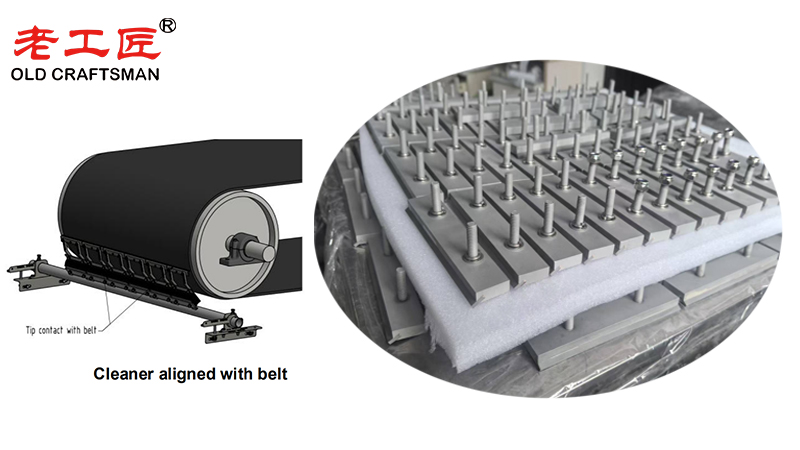
5. Maintenance Best Practices
Even the best carbide solution requires a disciplined maintenance schedule to remain effective.
- Inspect the “Crescent” Wear: Look at the contact point of the carbide blade. You should see a shiny wear pattern of about 0.5 to 1 inch (12–25 mm) . If the wear pattern is wider, the tension is too low. If it is a sharp line, the tension is too high.
- Check for “Wash-Out”: In high-impact or wet applications, the steel matrix holding the carbide tips can erode. If the carbide tips start protruding like “shark teeth” without the supporting matrix, the blade is failing and needs immediate replacement.
- Grease the Tensioners: If your system uses mechanical spring tensioners or pivot points, ensure they are lubricated. A seized pivot renders a carbide cleaner useless, as it can no longer maintain constant pressure.
6. Benefits of Investing in Effective Carbide Solutions
- Reduced spillage and cleanup.
- Longer belt and component life.
- Higher uptime and productivity.
- Improved safety and compliance (less dust, fewer hazards).
In mining and heavy industry, switching to or upgrading with high-quality tungsten carbide cleaners often pays for itself quickly through lower total ownership costs.
“Zhuzhou OC Precision Alloy Co., Ltd. could make tungsten carbide wear parts and make your equipment use life is tens of times longer than before! We specialize in providing customized carbide wear products solutions to meet the demanding requirements of industries such as aerospace, automotive, mining, and precision machining.”
Belt scraper Brazing brazingprocess carbide Carbide belt scraper carbidebrazing carbide hammer Crusher CRUSHER HAMMER HPGR HPGR feed chute liner Informational Internal stress metal mining Refractory Brick Mold Secondary belt cleaner scraper stresses VSI crusher wear plates welding