
A tungsten carbide conveyor belt cleaner reduces material carryback through a combination of extreme hardness, precision engineering, and effective scraper design. Here’s how it works step by step:
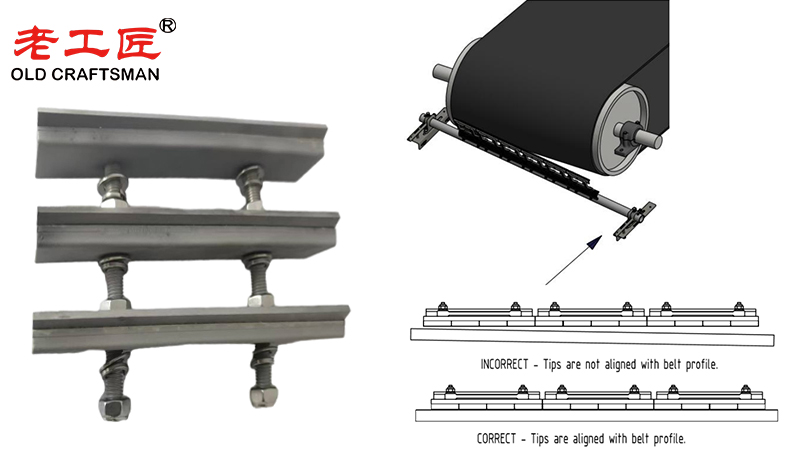
1. Abrasion-Resistant Scraping Edge
- Tungsten carbide is one of the hardest materials available (≈8.5–9 on Mohs scale, just below diamond).
- The cleaner blade maintains a sharp, durable edge even after prolonged contact with abrasive materials like coal, sand, ore, or cement clinker.
- Unlike steel or polyurethane blades, tungsten carbide doesn’t wear down quickly, so it continues to remove material effectively over long periods.
2. Constant Contact Pressure
- The blade is mounted on a tensioning system (spring, air, or rubber torsion mechanism) that keeps it pressed firmly against the belt.
- Because tungsten carbide resists wear, the blade profile stays consistent, ensuring uniform contact pressure across the belt width.
3. Effective Scraping Action
- As the belt passes over the discharge pulley, the tungsten carbide blade scrapes the residual material off the belt surface.
- The combination of hardness and sharpness cuts through sticky or compacted material, breaking the adhesion between the carryback and the belt.
4. Reduced Belt Wear
- While very hard, tungsten carbide blades can be engineered with smooth, polished surfaces and controlled edge geometries to prevent damaging the belt.
- Properly designed blades scrape material off without gouging or accelerating belt cover wear.
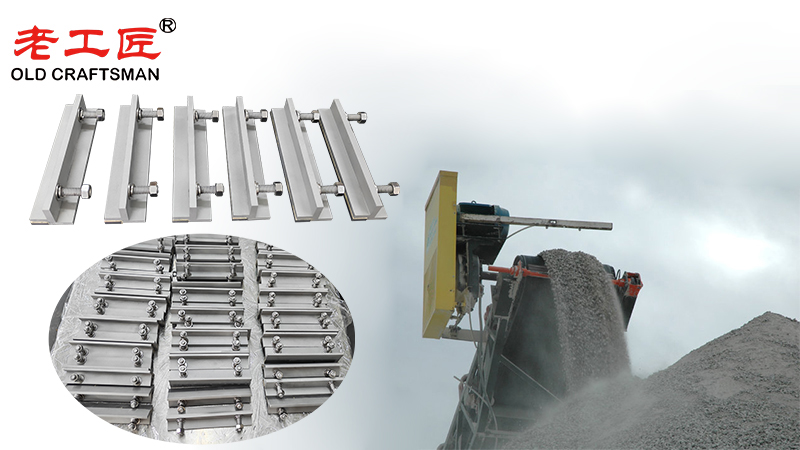
5. Longer Service Life → Less Maintenance
- Because tungsten carbide lasts many times longer than steel or urethane blades, the cleaner maintains effective carryback reduction without frequent adjustments or replacements.
- This consistency prevents periods of poor cleaning that often occur with worn blades.
6. Performance in Harsh Conditions
- Tungsten carbide resists corrosion, heat, and impact damage, making it suitable for high-temperature or chemically aggressive materials where other blades fail.
Practical Result
- Carryback reduction from 5–20% (with poor or no cleaning) down to less than 0.5–1%.
- Reduced belt mistracking, less spillage, lower housekeeping costs, and less wear on idlers and pulleys.
In summary, a tungsten carbide conveyor belt cleaner minimizes carryback by maintaining an extremely hard, sharp, and wear-resistant edge that consistently scrapes material off the belt surface over millions of cycles.
7. Important Considerations for Effective Use
- Proper Selection and Installation: Match blade grade to material abrasiveness and belt speed. Use on vulcanized belts or carefully with mechanical splices (some carbides are splice-compatible; others risk damage). Avoid on damaged/worn belts if possible—polyurethane may be safer initially.
- Tensioning: Critical—too low reduces cleaning; too high increases friction/wear without extra benefit. Self-adjusting or air-tensioned systems help maintain optimal pressure.
- Primary + Secondary Setup: Primary (often at head pulley) for bulk removal; secondary (with carbide) for fines cleanup. Tertiary may be added for stubborn cases.
- Quality Matters: High-grade carbide (free of voids, contamination, or poor binder) performs best and avoids uneven wear or belt damage.
Tungsten carbide cleaners are especially common in mining, aggregates, cement, and other heavy industries where carryback is a major issue. When correctly chosen, tensioned, and maintained, they significantly cut carryback, leading to cleaner, more reliable conveyor operation.
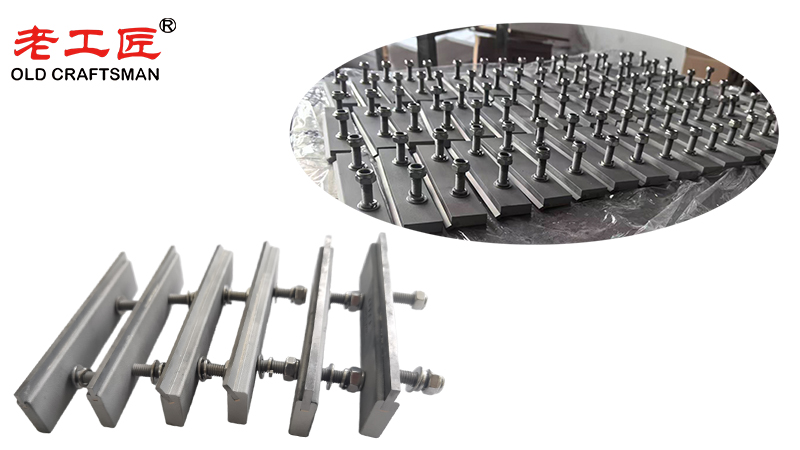
“Zhuzhou OC Precision Alloy Co., Ltd. could make tungsten carbide wear parts and make your equipment use life is tens of times longer than before! We specialize in providing customized carbide wear products solutions to meet the demanding requirements of industries such as aerospace, automotive, mining, and precision machining.”
Belt scraper Brazing brazingprocess carbide Carbide belt scraper carbidebrazing carbide hammer Crusher CRUSHER HAMMER HPGR HPGR feed chute liner Informational Internal stress metal mining Refractory Brick Mold Secondary belt cleaner scraper stresses VSI crusher wear plates welding