
High-pressure grinding rolls (HPGR) are among the most punishing environments in mineral processing. Every day, these machines crush iron ore, copper ore, gold ore, and cement clinker under forces that would destroy ordinary wear components in hours. The roll edges, in particular, face a brutal combination of extreme compressive pressure and relentless impact from coarse, abrasive material.
Old Craftsman HPGR carbide edge blocks are designed to provide reliable wear protection under demanding operating conditions, helping mining operators maintain equipment performance and extend the service life of critical roller components.
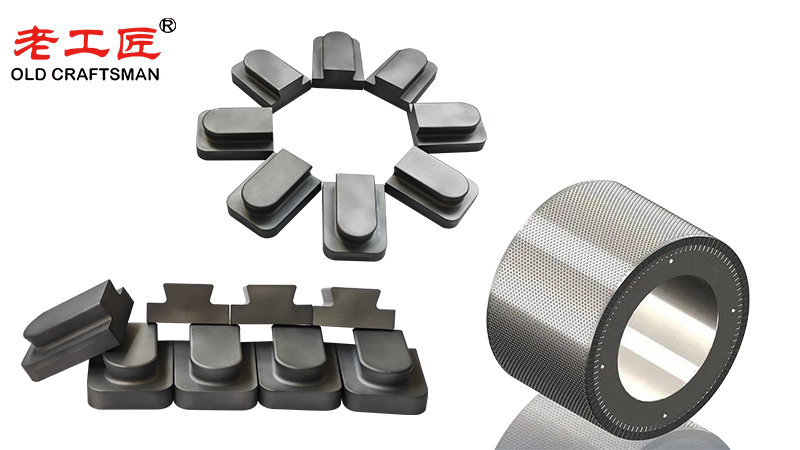
1. Why Do HPGR Carbide Edge Blocks Face Extreme Stress?
In an HPGR system, two counter-rotating rollers compress material under high pressure. While the central roller area benefits from the compacted material bed that helps protect the surface, the edges experience different material flow and wear conditions.
The main challenges include:
- High compressive stress: Repeated crushing cycles place substantial loads on the roller edge components.
- Severe abrasive wear: Hard mineral particles continuously rub against exposed surfaces.
- Impact loading: Oversized particles and irregular feed materials can create sudden mechanical impacts.
- Uneven material distribution: Lateral material movement can accelerate localized wear and cause an uneven roller profile.
These combined conditions require edge protection materials that balance hardness, strength, and fracture toughness.
2. Tungsten Carbide: A Balance of Hardness and Toughness
Tungsten carbide is widely used in mining wear parts because of its high hardness and excellent resistance to abrasive wear. However, hardness alone is not enough for HPGR applications, where components must also withstand mechanical loading and impact.
Old Craftsman HPGR carbide edge blocks use cemented tungsten carbide, typically based on tungsten carbide (WC) and a metallic binder such as cobalt. Their performance depends on the appropriate carbide grade, grain structure, binder content, and manufacturing quality.
Key material advantages include:
- High wear resistance: Helps resist continuous abrasion from hard ores and mineral particles.
- Strong compressive performance: Supports operation under repeated crushing loads.
- Improved impact resistance: A properly selected grade helps reduce the risk of cracking and chipping.
- Consistent material properties: Controlled powder processing and sintering help produce reliable wear components.
The optimal carbide grade depends on the application. Highly abrasive materials may require greater wear resistance, while severe impact conditions may call for a grade with higher toughness.
3. How Manufacturing Quality Improves Edge Block Reliability
Even premium raw materials cannot deliver reliable performance without proper manufacturing control. Density, porosity, microstructure, and dimensional accuracy all influence the service performance of cemented carbide components.
At Old Craftsman, the manufacturing process includes raw material preparation, powder mixing, pressing, sintering, and precision grinding where required. HIP treatment can also be applied when specified by the product requirements.
These processes help support:
- Uniform material structure and reliable mechanical properties.
- Reduced internal porosity through appropriate densification controls.
- Accurate dimensions for proper installation and fit.
- Consistent quality through inspection of finished components.
For demanding HPGR applications, selecting the correct grade and maintaining manufacturing consistency are essential steps toward reducing premature component failure.
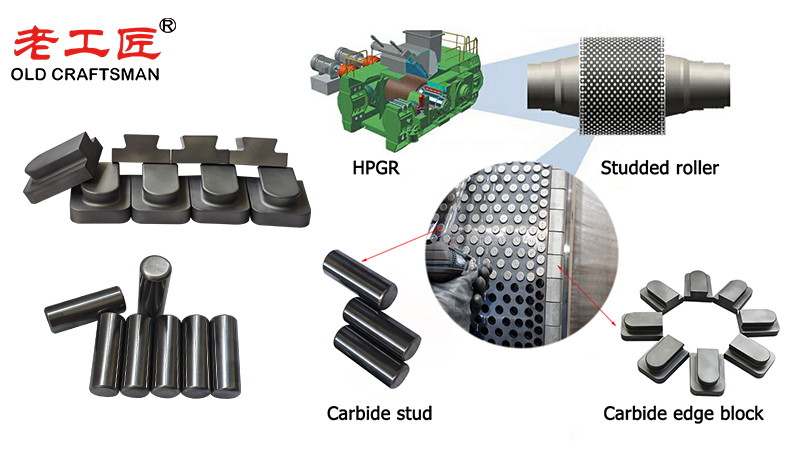
4. Why Installation and Operating Conditions Matter
Carbide edge blocks must work as part of the complete HPGR roller system. Their performance depends not only on the carbide itself but also on the component design, attachment method, roller structure, and operating environment.
Correct installation helps distribute loads appropriately and reduce localized stress concentrations. The attachment method should be selected according to the original equipment design and engineering requirements.
Operators should also monitor feed size, material hardness, moisture, operating pressure, and signs of uneven wear. Excessive impact, unsuitable installation, or unfavorable operating conditions can still cause damage even when high-quality carbide is used.
A coordinated approach to material selection, manufacturing, installation, and maintenance offers the best opportunity to improve component reliability.
5. Benefits of Old Craftsman HPGR Carbide Edge Blocks
For mining and cement plants seeking dependable roller protection, Old Craftsman provides tungsten carbide wear components designed for demanding industrial applications.
Potential benefits include:
- Improved resistance to abrasive wear and repeated mechanical loading.
- Better protection of vulnerable roller edge areas.
- More stable roller profiles under suitable operating conditions.
- Reduced frequency of wear-part replacement when compared with less suitable materials.
- Customized dimensions and carbide grades based on customer drawings and application requirements.
Actual service life depends on ore characteristics, machine design, operating parameters, installation quality, and maintenance practices.
Conclusion
Extreme pressure, abrasive minerals, and impact loading make HPGR roller edge protection a demanding engineering challenge. Reliable carbide edge blocks require more than high hardness: they need an appropriate balance of wear resistance, toughness, manufacturing quality, and dimensional accuracy.
Old Craftsman HPGR carbide edge blocks offer a customized wear-protection solution for mining and cement applications. By selecting the right carbide grade and design for specific operating conditions, customers can work toward improved roller protection, reduced maintenance requirements, and more reliable production.
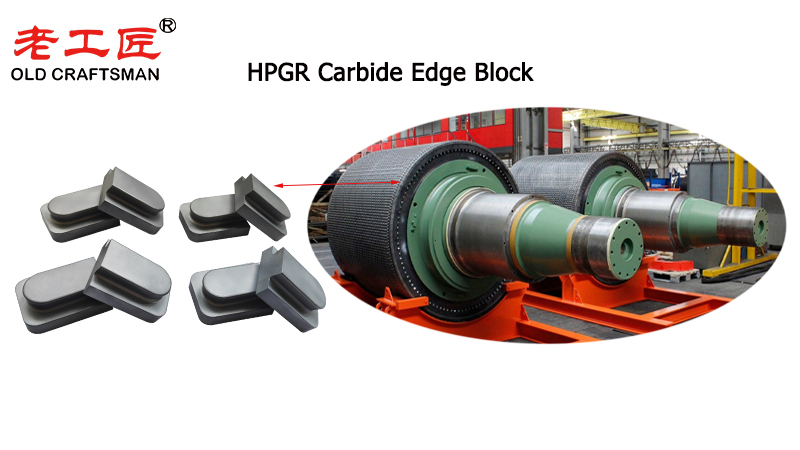
Looking for HPGR carbide edge blocks for your equipment? Contact Old Craftsman at www.zzcraftsman.com with your drawings, dimensions, required carbide grade, and application details for a customized solution.
Beyond HPGR Carbide Edge Block, our extensive portfolio includes a broad spectrum of solutions specifically designed for industries demanding exceptional wear and impact resistance. Our premium offerings include HPGR Wear Parts, durable mining conveyor belt cleaner, robust crusher hammer heads, specialized components for sand-making machines, protective linings for refractory brick molds, and efficient intensive mixer blades.
“Zhuzhou OC Precision Alloy Co., Ltd. could make tungsten carbide wear parts and make your equipment use life is tens of times longer than before! We specialize in providing customized carbide wear products solutions to meet the demanding requirements of industries such as aerospace, automotive, mining, and precision machining.”
Belt scraper Brazing brazingprocess carbide Carbide belt scraper carbidebrazing carbide hammer Crusher CRUSHER HAMMER HPGR HPGR feed chute liner Informational Internal stress metal mining Refractory Brick Mold Secondary belt cleaner scraper stresses VSI crusher wear plates welding