
In the demanding world of mining, recycling, and aggregate processing, equipment takes a severe beating. Crusher hammers are at the frontline of this impact, tasked with pulverizing abrasive rocks, ores, and concrete. To survive this punishing environment, manufacturers rely on tungsten carbide.
However, the performance of tungsten carbide crusher hammers depends on more than hardness alone. Hardness and toughness must be carefully balanced to ensure that the hammer resists abrasive wear without excessive chipping or fracture.
In this article, we explore the key factors that determine the hardness and toughness of tungsten carbide crusher hammers and how to select the right material for different crushing applications.
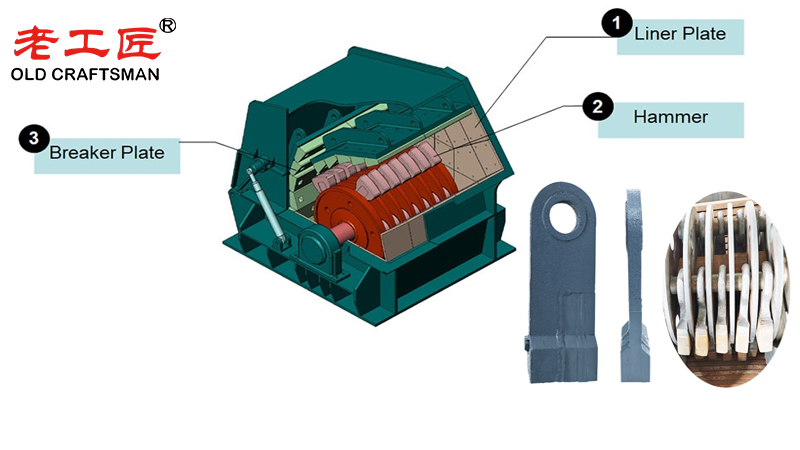
1. Tungsten Carbide Grade and Cobalt Content
The composition of tungsten carbide is one of the most important factors affecting its mechanical properties. Cemented carbide typically consists of tungsten carbide (WC) particles bonded together by a metallic binder, usually cobalt (Co).
Cobalt content directly influences the balance between hardness and toughness.
- Higher cobalt content: Generally improves toughness and impact resistance but reduces hardness and wear resistance.
- Lower cobalt content: Generally increases hardness and wear resistance but can make the material more susceptible to chipping under severe impact.
For example, grades such as YG6 and YG8 have different cobalt contents and mechanical properties. YG6 generally offers higher hardness and better wear resistance, while YG8 typically provides greater toughness for applications involving stronger impact.
The best grade depends on the crushed material, impact intensity, operating speed, and expected wear pattern. A harder grade is not always the best choice, especially when the crusher hammer experiences frequent heavy impacts.
2. Tungsten Carbide Grain Size
WC grain size is another critical factor determining carbide performance.
Fine-grain tungsten carbide generally offers higher hardness and excellent wear resistance. Coarser-grain carbide often provides improved fracture resistance and toughness, depending on the composition and manufacturing process.
The main differences include:
| WC Grain Size | Typical Characteristics | Suitable Conditions |
|---|---|---|
| Fine grain | High hardness, excellent wear resistance | Abrasive materials and relatively moderate impact |
| Medium grain | Balanced hardness and toughness | General crushing applications |
| Coarse grain | Often improved toughness and impact resistance | Heavy-impact crushing conditions |
These are general trends rather than absolute rules. The final properties also depend on cobalt content, porosity, grain distribution, and sintering quality.
Choosing the appropriate grain size helps achieve a balance between resisting material abrasion and preventing premature hammer failure.
3. Manufacturing Process and Sintering Quality
Even when two tungsten carbide hammers use the same nominal grade, their performance may differ because of variations in manufacturing quality.
The main production stages include powder preparation, mixing, pressing, sintering, and finishing.
Powder preparation and mixing: Uniform distribution of tungsten carbide particles and binder helps ensure consistent properties throughout the product.
Pressing: Proper compaction reduces density variations and helps prevent defects in the carbide body.
Sintering: Accurate temperature control and appropriate sintering conditions are essential for achieving the required density, microstructure, hardness, and strength.
Quality inspection: Hardness testing, density measurement, dimensional inspection, and checks for internal defects help verify product consistency.
Porosity, abnormal grain growth, and other microstructural defects can reduce strength and increase the risk of premature chipping or fracture.
For this reason, reliable manufacturing and strict quality control are essential when selecting tungsten carbide crusher hammer suppliers.
4. Operating Conditions and Impact Load
The actual working environment has a significant influence on the required hardness and toughness.
Crusher hammers may encounter abrasive minerals, hard rock, irregular feed sizes, and repeated high-energy impacts. Different applications therefore require different material properties.
For example:
- Highly abrasive materials: Higher hardness and wear resistance may be priorities.
- Large feed particles and heavy impacts: Greater toughness may be necessary to reduce chipping and fracture.
- Mixed crushing conditions: A balanced carbide grade may provide the best overall service life.
Operating conditions such as rotor speed, feed rate, particle size, and the presence of tramp metal can also influence failure patterns.
If a hammer wears down too quickly, improving wear resistance may help. If it repeatedly cracks or loses carbide fragments, increasing hardness alone is unlikely to solve the problem. The grade, hammer geometry, mounting design, and impact conditions should all be evaluated.
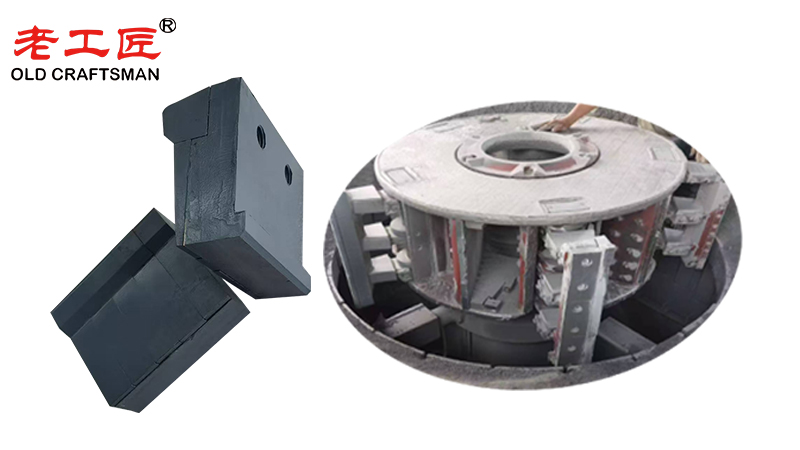
5. Hammer Design and Carbide-to-Steel Bonding
The design of a tungsten carbide crusher hammer also affects its durability.
Some crusher hammers use carbide inserts or tips attached to a steel body. In these designs, the performance of the complete assembly depends on both the carbide material and the bonding structure.
Important considerations include:
- Carbide insert geometry: Appropriate dimensions and shapes help distribute impact loads.
- Steel body design: Adequate support reduces stress concentrations around the carbide inserts.
- Brazing quality: Proper brazing and joint design help prevent carbide inserts from detaching during operation.
- Thermal effects: Excessive brazing temperatures or unsuitable heating and cooling procedures may affect joint integrity and introduce harmful residual stresses.
A high-hardness carbide insert cannot deliver its full potential if the steel support or brazed joint fails prematurely. The complete hammer assembly must be designed for the actual crushing environment.
6. How to Balance Hardness and Toughness
Selecting a suitable tungsten carbide crusher hammer requires understanding the relationship between hardness, toughness, and wear mechanisms.
Hardness measures resistance to localized deformation and indentation. Toughness describes the material’s ability to resist crack initiation and propagation under loading. These properties are related but are not interchangeable.
A material with excellent hardness may resist abrasion effectively but still fail under severe impact if its fracture resistance is insufficient.
Conversely, a very tough grade may withstand impact well but wear more quickly when processing highly abrasive materials.
A practical selection process should consider:
- Identify the type and abrasiveness of the crushed material.
- Evaluate impact severity, feed size, and operating speed.
- Determine whether previous hammers failed through abrasive wear, chipping, cracking, or insert detachment.
- Select a carbide grade with suitable hardness and toughness.
- Conduct wear trials and compare service life under equivalent operating conditions.
Working with an experienced tungsten carbide manufacturer can help identify the appropriate grade and optimize the hammer design for specific operating conditions.
7. How to Extend the Service Life of Tungsten Carbide Crusher Hammers
In addition to selecting the right material, several practical measures can improve hammer performance.
Choose the correct carbide grade. Avoid selecting a grade based solely on the highest hardness value. Consider the balance between abrasion resistance and impact toughness.
Maintain consistent feed conditions. Excessively large feed particles and unexpected metal objects can create impact loads beyond the intended operating range.
Inspect the hammer assembly regularly. Check for abnormal wear, cracks, loose inserts, and damage to the steel body or brazed joints.
Optimize operating parameters. Appropriate rotor speed, feed distribution, and crusher settings can help reduce unnecessary impact stress.
Monitor actual wear performance. Record operating hours, processed tonnage, failure modes, and replacement frequency. These data help determine whether a change in carbide grade or design is justified.
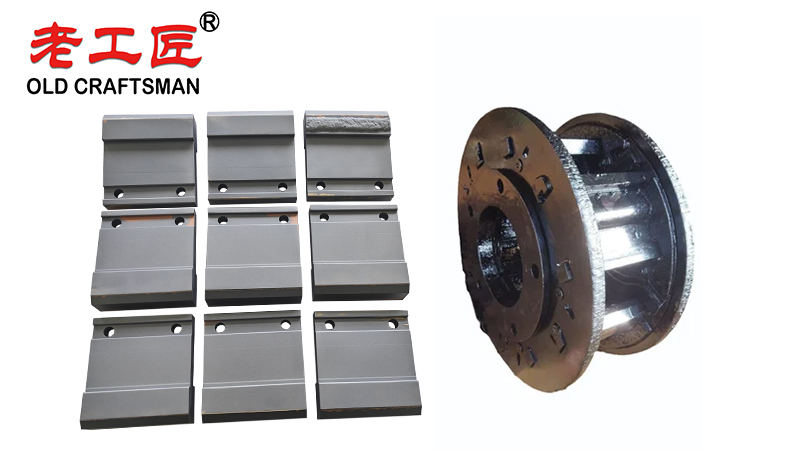
Conclusion
The hardness and toughness of tungsten carbide crusher hammers are determined by several interconnected factors, including cobalt content, WC grain size, manufacturing quality, operating conditions, hammer design, and bonding integrity.
The key is not to maximize hardness or toughness independently, but to find the right balance for the specific crushing application.
At Old Craftsman, we manufacture tungsten carbide wear parts for demanding industrial applications. By considering material grade, wear conditions, and product design, we help customers identify suitable carbide solutions for crusher hammers and other wear-resistant components.
If you are looking for tungsten carbide crusher hammers or customized carbide wear parts, contact Old Craftsman with your application details, drawings, or existing hammer specifications to discuss a suitable solution.
Beyond carbide crusher hammer, our extensive portfolio includes a broad spectrum of solutions specifically designed for industries demanding exceptional wear and impact resistance. Our premium offerings include HPGR Wear Parts, durable mining wear liner plates, mining carbide conveyor belt cleaner, specialized components for sand-making machines, protective linings for refractory brick molds, and efficient intensive mixer blades.
“Zhuzhou OC Precision Alloy Co., Ltd. could make tungsten carbide wear parts and make your equipment use life is tens of times longer than before! We specialize in providing customized carbide wear products solutions to meet the demanding requirements of industries such as aerospace, automotive, mining, and precision machining.”
Belt scraper Brazing brazingprocess carbide Carbide belt scraper carbidebrazing carbide hammer Crusher CRUSHER HAMMER HPGR HPGR feed chute liner Informational Internal stress metal mining Refractory Brick Mold Secondary belt cleaner scraper stresses VSI crusher wear plates welding