
High Pressure Grinding Rolls (HPGR) have become a cornerstone of energy-efficient comminution in modern mining operations. Yet even the most advanced HPGR system can fall victim to an often-overlooked wear component: the cheek plates. These side liners play a critical role in containing feed material at the roll ends, maintaining grinding pressure, and ensuring consistent product size distribution. When they wear prematurely, the consequences ripple through the entire operation—reduced throughput, higher energy consumption, and escalating maintenance costs. For mining operations handling highly abrasive ores, Old Craftsman tungsten carbide cheek plates provide a wear-resistant solution designed to help control these costs.
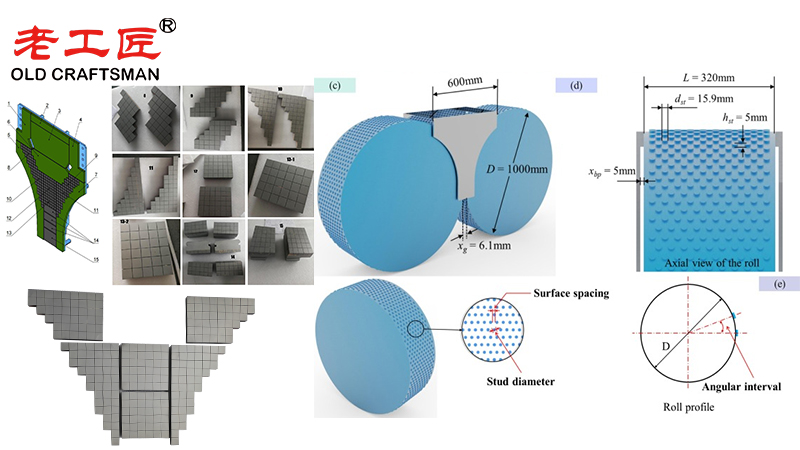
1. Longer Wear Life Reduces Replacement Frequency
Traditional steel or cast-iron cheek plates can experience rapid abrasive wear in demanding HPGR applications. Once the working profile becomes significantly worn, replacement or repair may be required.
Tungsten carbide has extremely high hardness and excellent resistance to abrasive wear. By incorporating carbide inserts or carbide blocks into the cheek plate design, the wear-resistant surface can maintain its geometry for a longer operating period.
This can reduce:
- Frequency of cheek plate replacement
- Spare parts consumption
- Maintenance labor
- Planned maintenance requirements
- Emergency repair costs
The actual service life depends on ore characteristics, feed size, moisture, operating pressure, plate design and other operating conditions, so performance should be evaluated using the customer’s specific application data.
2. Reduce HPGR Maintenance Downtime
Replacing worn HPGR wear parts can require equipment shutdown, maintenance personnel and lifting equipment. For high-throughput mining operations, even a relatively short shutdown can represent a significant production opportunity cost.
A longer-lasting cheek plate can extend the interval between replacements and make maintenance more predictable.
Instead of frequently stopping the HPGR because of accelerated side-plate wear, operators can potentially schedule replacement together with other planned maintenance activities.
Fewer unplanned interventions = higher equipment availability.
Historical HPGR operating experience has also demonstrated the importance of durable cheek-plate materials; one reported application used tungsten carbide cheek-plate tips with approximately 1,000 hours of service life.
3. Maintain a More Consistent Grinding Gap
Cheek plates help control the material at the edges of the rolls. Excessive wear can increase the side gap and allow material to escape from the high-pressure grinding zone.
This side leakage can reduce the amount of material effectively processed between the rolls.
Old Craftsman’s carbide cheek plates are designed to maintain their wear profile for longer, helping provide more consistent containment of the feed material.
A more stable cheek-plate geometry can contribute to:
- Better material confinement
- More consistent grinding conditions
- Reduced bypass material
- More stable particle size distribution
- More consistent HPGR throughput
The relationship between side sealing, edge effects and throughput is also recognized in HPGR equipment design. OEM information notes that controlling material bypass at the roll edges can improve throughput and reduce circulating loads.
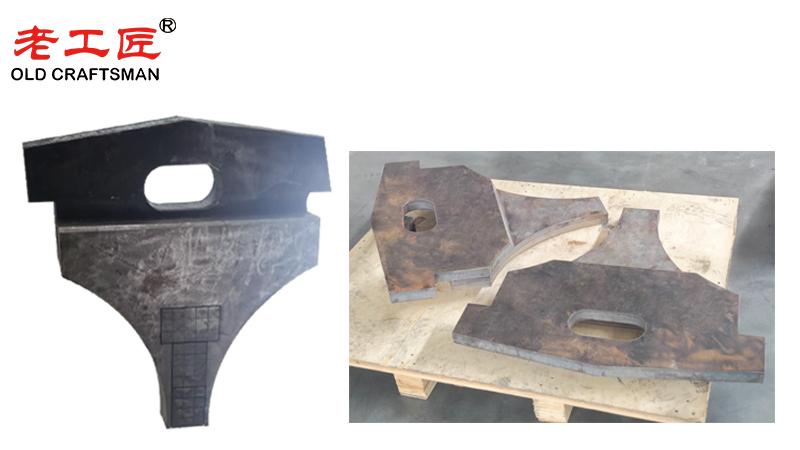
4. Lower the Total Cost of Ownership
The cheapest cheek plate is not necessarily the one with the lowest purchase price.
For HPGR applications, a better way to evaluate wear parts is cost per operating hour or cost per tonne processed.
A simple calculation is:
Cost per tonne = (Purchase Cost + Replacement Labor + Downtime Cost + Related Maintenance Cost) ÷ Total Tonnes Processed
For example, a carbide cheek plate may have a higher initial purchase price than a conventional steel plate. However, if it lasts considerably longer and requires fewer replacements, the overall cost per tonne can be lower.
This is why HPGR operators should evaluate cheek plates based on total operating cost rather than purchase price alone.
5. Reduce the Impact of Abrasive Ores
Mining ores can contain hard and abrasive minerals that rapidly wear conventional wear materials. Tungsten carbide is specifically valued for its combination of high hardness and wear resistance.
Old Craftsman can manufacture customized carbide cheek plates according to the customer’s:
- HPGR model
- Cheek plate dimensions
- Carbide grade
- Carbide block or insert configuration
- Steel substrate
- Working profile
- Mounting requirements
- Operating conditions
Customized construction allows the carbide distribution to be adapted to areas experiencing the highest wear.
6. Improve Maintenance Planning
Predictable wear is particularly valuable in large-scale mining operations.
When cheek plate wear is more predictable, maintenance teams can better plan:
Inspection → Wear measurement → Replacement planning → Spare parts preparation → Scheduled shutdown
This can help avoid situations where unexpected cheek plate failure forces an unplanned HPGR shutdown.
For large processing plants, improving maintenance predictability can be just as important as increasing the nominal service life of a wear part.
7. Old Craftsman Carbide Cheek Plates: Designed for Long-Term Value
Old Craftsman focuses on customized tungsten carbide wear solutions for mining and mineral processing equipment.
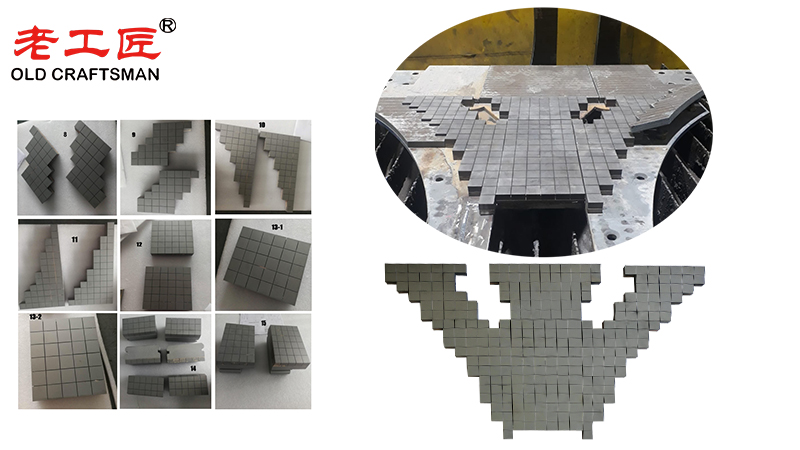
Our HPGR carbide cheek plates can combine a steel support structure with strategically positioned tungsten carbide inserts or blocks. The design is intended to provide high wear resistance while maintaining the required mechanical strength and dimensional stability.
The key objective is not simply to make a harder cheek plate.
It is to help customers achieve:
Longer wear life + fewer replacements + less downtime + stable grinding performance = lower HPGR operating costs.
Conclusion
HPGR operating costs are influenced by much more than the initial price of the equipment. Wear-part consumption, maintenance labor, downtime and lost production can all contribute significantly to the total cost of ownership.
By using properly designed tungsten carbide HPGR cheek plates, mining operators can potentially extend wear intervals, reduce maintenance frequency and maintain more consistent material confinement at the roll edges.
Old Craftsman provides customized carbide cheek plates for demanding HPGR applications, with designs developed according to equipment dimensions, wear conditions and customer requirements.
Beyond HPGR Cheek Plates, our extensive portfolio includes a broad spectrum of solutions specifically designed for industries demanding exceptional wear and impact resistance. Our premium offerings include HPGR Wear Parts, durable mining conveyor belt cleaner, robust crusher hammer heads, specialized components for sand-making machines, protective linings for refractory brick molds, and efficient intensive mixer blades.
“Zhuzhou OC Precision Alloy Co., Ltd. could make tungsten carbide wear parts and make your equipment use life is tens of times longer than before! We specialize in providing customized carbide wear products solutions to meet the demanding requirements of industries such as aerospace, automotive, mining, and precision machining.”
Belt scraper Brazing brazingprocess carbide Carbide belt scraper carbidebrazing carbide hammer Crusher CRUSHER HAMMER HPGR HPGR feed chute liner Informational Internal stress metal mining Refractory Brick Mold Secondary belt cleaner scraper stresses VSI crusher wear plates welding